

Whether you call it a spiritual wilderness, drought, dry-season, or rut, the experience of distance from God and apathy in our Christian walk saps us of life. It confuses and frustrates us. Why doesn’t God feel near? Why can’t I get out? Why aren’t my passion or desires for the things of God increasing?

Why We Need God’s Promises
“The knowledge of the glory of God must be promising if it is to carry power. We must know it and believe that we are included—that the promises are ours, that the call is to us” (John Piper)
Life shakes us up. It smacks us with wind and waves. It might be a trial, suffering, a personal temptation, dealing with guilt and shame, struggling with something like anxiety or fear, or the discouraging howls of an extended spiritual wilderness. When these storms blow hard, what keeps us upright? What sustains and steadies us?

The Past, Present, and Future Realities of the Resurrection
We each have a story that includes a past, present, and a future. The Bible also tells a story; a narrative of historical events full of significance for all of humanity.
As those united to Jesus, we are made participants in God’s story and cast as characters in the drama of redemptive history. The resurrection of Jesus is one of those climactic moments in both Jesus’ life and the Bible’s story of God redeeming a people and restoring His corrupted creation. When we think of Jesus’ resurrection we should consider the past accomplishment, the present effects, and the future realities dawning upon us. As participants of the story through union with Christ, we must see how the resurrection rewrites our past, remakes us in the present, and reshapes our future.
Continue reading The Past, Present, and Future Realities of the Resurrection
The Cross is Central but Incomplete
Jesus’ sacrificial death and triumphant resurrection stand at the center of the “good news” Christians stake their lives upon. The Bible joins the bloody cross and empty tomb as two distinct but inseparable events. And yet, many of our gospel presentations and theological conversations refer to the cross as the place where salvation was fully accomplished and the deal was sealed. Christ’s resurrection is either left out or tacked on as the cherry on top. I’m thankful evangelicals have been “cross-centered” but it’s unfortunate we’ve moved the resurrection to the periphery.

4 Ironies of the Cross
Like any good narrative, the Bible uses literary devices such as metaphors, double-meanings, paradoxes, and irony. The New Testament authors often used irony to draw out the difference between how mankind sees things and how God sees things. Irony shows the sharp contrast between expectations and realities as well as between intent and effect. A third way authors employ irony is to highlight something the readers know that the characters in the story would have been unaware of. In Colossians 2:13-15 Paul provides at least four ironies tied to the cross of Jesus Christ.
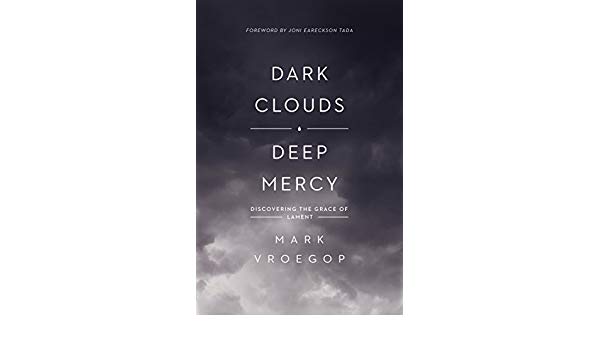
Top 5 Reasons to Buy Dark Clouds, Deep Mercy
I love books, whether it’s reading them, talking about them, giving them as gifts, or even flipping through them at the library or bookstore. Books become a conversation partner stirring us to action or stretching our thinking. At any point, I’m reading (or researching) several books, so it’s easy for me to get excited about new books. But, having grown through Mark Vroegop’s preaching, serving under him as a staff member, and getting the chance to see this book develop, I’m especially excited to share with others what I think will be a very helpful gift to the Church. Here are my top 5 reasons (among others) to read Dark Clouds, Deep Mercy: Discovering the Grace of Lament.
Continue reading Top 5 Reasons to Buy Dark Clouds, Deep Mercy

Resources from Prioritization Forum
Last night at College Park Church Fishers, we hosted a short forum on prioritization. With all the choices and possible commitments before us every day, and with the pace of life and the constant presence of distractions, it’s an important topic (though very broad). Below are a few of the resources recommended by the panel members.

John Piper on Not Neglecting Spiritual Refreshment through Nature
God’s Creation is a gift, not merely a resource but a means of our refreshment. In John Piper’s sermon-biography of David Brainerd he briefly compares Brainerd and Jonathan Edwards. He does so in the context of discussing the sufferings Brainerd endured, including regular bouts with depression. While not suggesting a walk removes depression, Piper draws on Edwards and Charles Spurgeon to suggest Brainerd’s neglect of nature likely restricted him from one means of God’s grace to us in our weakness and darkness. Below is an extended quote. With Spring knocking on our doors and with today’s temptation to always reach for our smartphone or the remote, I hope this encourages us to take advantage of God’s Creation for our good and His glory.
Continue reading John Piper on Not Neglecting Spiritual Refreshment through Nature

The Pain of Broken Idols & the Path to Finding Hope: Comparing Two Songs
An idol is anything that takes the place of God in our life. They are the things we look to, trust in, and give our allegiance to instead of God. They offer to satisfy the desires of our heart and make us happy, but they never are true to their word. The end of every fling with our idols leads to brokenness, pain, and regret. Every day, we face the choice of giving in to the seductive allure of those idols, or steering clear of them and following after the One who can give joy and who does follow through on His promise to satisfy us and grant us life and joy. To see the power and pain of idols, and to consider where we might find hope, I want to compare and contrast the songs “Vice” by Miranda Lambert and “Ulysses” by Josh Garrels. You can see the full lyrics for each, side-by-side, at the bottom of this post.
Continue reading The Pain of Broken Idols & the Path to Finding Hope: Comparing Two Songs
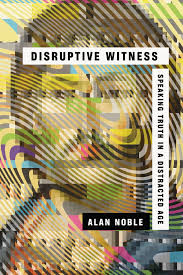
A Timely Book: Disruptive Witness by Alan Noble
As a fan and student of Church History, I love timeless books. Any Christian in any place at any time could pick up John Owen’s Communion with the Triune God and benefit from it. But there’s also great value in timely books, such as Alan Noble’s Disruptive Witness: Speaking Truth in a Distracted Age.
Continue reading A Timely Book: Disruptive Witness by Alan Noble
 indycrowe