Looking Back at Puritanism (with blanket statements)

ryken
While not comprehensive, here’s a short list from Leland Ryken’s Worldly Saints of the contributions and weaknesses of the Puritans.

Contributions of Puritanism
• A God-centered life; all of life is sacred because all of live is lived to God
• God can be seen in small things and big things, ordinary and extraordinary
• Be active and expectant of God working
• The Christian life is practical and must be lived.
• A focus on inner realities and not just external appearances; root issues
• Able to balance things often polarized; head & heart, activism & caution
• Simplicity. A simplicity that exalts, not diminishes

Weaknesses of Puritanism
• An inadequate view of recreation
• Could lead to too many rules or strictness in exactness
• Verbose, too wordy
• Partisan spirit; lack of sensitivity to other groups

This also isn’t comprehensive, but here’s a list of what I see as a few of the reasons why I love the Puritans and what their legacy has been.

Legacy of Puritanism
• Pious evangelical theology.
o Bible governs all of life and leads to communion with God and growing in holiness.
o Spiritual heirs: Isaac Watts, Edwards, Whitefield, Spurgeon, Lloyd Jones
o Westminster Confession & Catechisms, Savoy Declaration, Cambridge Declaration
o Christianity as a religion touching head (knowledge), heart (affections), and hands (practice)
• Its reforming emphasis helped lead to Great Awakening and other revivals.
• The family dynamic in the West.
• In some ways, the formation of the United States—republicanism and democracy.
• America’s early institutions: Harvard, Yale, Princeton.
• Banner of Truth and Puritan literature.

Why I Appreciate the Puritans
• A perspective different than 21st century
• No separation between academy and church; the leading theologians and influencers were pastors
• They thought deeply and felt deeply
• They sit on a doctrine or thought and press out its conclusions
• All theology is practical and all practice is theological
• They wrote amidst hard circumstances; persecution, plague, hiding, sickness, war
• They hold up both the glory of God and communion with God

Puritan Quotes

This Sunday night I’ll be giving a short presentation on English Puritanism at my church. I’d like to whet the appetite by beginning with a few Puritan quotes. Here are some I grabbed off my notes from Evernote but I’d love for you to leave any great (short) English Puritan quotes you might have.

“The winter prepares the earth for the spring, so do afflictions sanctified prepare the soul for glory.” Richard Sibbes

“Conceal not your wounds; open all before him.” Richard Sibbes

“There is more mercy in Christ than sin in us.” Richard Sibbes

“Be killing sin or sin will be killing you.” John Owen

“He who prays as he ought will endeavour to live as he prays.” John Owen

“Christ is the most bountiful physician. Other patients do enrich their physicians, but here the physician enriches the patient. Christ elevates all his patients: he not only cures them but crowns them (Rev. 2:10). Christ not only raises them from the bed, but to the throne; he gives the sick man not only health but also heaven.” Thomas Watson

“Let this revive you; shortly you will enjoy God, and then you shall have more than you can ask or think, glory without intermission or expiration. We will never be ourselves fully until we enjoy God eternally.” Thomas Watson.

“In the Word preached the saints hear Christ’s voice; in the sacrament they have his kiss.” Thomas Watson

“We are justified & saved by the very righteousness of Christ, and no other. He wrought it, though we wear it.” John Flavel

“Here is encouragement to persevere. Jesus, our head, is already in heaven; and if the head be above water the body cannot drown.” John Flavel

“In our first paradise in Eden there was a way to go out but no way to go in again. But as for the heavenly paradise, there is a way to go in, but not way to go out.” Richard Baxter

“God’s presence makes a crowd a church.” Richard Baxter

Puritans vs Quakers

nuttallI recently finished Geoffrey Nuttall’s The Holy Spirit in Puritan Faith and Experience. It was overall a very helpful book on understanding some of the key theological and practical issues that 17th century Puritans and their opponents were wrestling with. Throughout the book Nuttall compares the conservative Puritans and nonconformists (largely though not exclusively relying on Sibbes, Petto, Owen, Baxter, T Goodwin, and Howe), the “radical Puritans” and Separatists (Saltmarsh,
Llwyd, Ebury), and the Quakers (Fox, Dewsbury).

One of the dividing lines between Puritans and Quakers was the relationship between the Spirit and the Word. The Puritans followed Calvin (see my past blog ) in the indivisible connection between the Spirit of God and the Word of God, whereas George Fox and the Quakers allowed for a separation between the two. What this led too in the Quakers was an elevating the Spirit within over the Word of God that we’ve received, which then quickly progressed to a trust in inner impulses over the written and authoritative Word of God. The relationship between the Spirit and the Word wasn’t a 17th century matter but is a Church matter…in every century (see past blog on Spirit and Word in Acts). How does God speak to us, lead us, and open our eyes? How does the written Word become alive in our hearts and minds? Do we trust first something inside of us which may or may not be the Spirit or do we trust first what we know is the Spirit since He has spoken through the inspired Word? These are questions that aren’t talked about enough in churches today but are absolutely essential for how we live the Christian life. Here are a few important thoughts and quotes from the book on the relationship between the Spirit and the Word as a fault-line between Puritans and Quakers.

Nuttall summarizes the Puritan’s stance as follows: “The normal, central emphasis throughout Puritanism is upon the closest conjunction of Spirit and Word” (23). What this means, in sum, is that God’s Spirit always speaks to us today in, by, or through the Word of God. Also, the Word of God, written or spoken, is only made effective or enlightened in the reader/hearer by the Spirit’s illumination of the Word. This means the Spirit and the Word always work in tandem. The Spirit has spoken authoritatively and infallibly through the Word, and the Word needs the Spirit’s illumination for it to penetrate our minds and hearts. This neither set the Spirit over the Word nor do it set the two in opposition. Rather, since it is the Spirit who inspired the Word we cannot and should not imagine the Spirit now contradicting himself or setting up a different authority. Richard Sibbes explains it like this: “the breath of the Spirit in us is suitable to the Spirit’s breathing in the Scriptures; the same Spirit doth not breathe contrary motions” (23).

This is immensely helpful in testing our faith and experience. How do we test something we feel “led to do” or we think “God is saying to us” through an internal prompting? “Hitherto, God’s Word in Scripture has been treated as the criterion by which to test faith and experience. Now, the Holy Spirit is introduced as the touchstone by which all else is to be tried, including the Bible itself….Throughout the years from 1650 onwards there is a perpetual controversy, whether the Word is to be tried by the Spirit, or the Spirit by the Word” (28). Here Nuttall summarizes the issue between the two groups: do we test the internal Spirit by the external Word or do we test the Word by the Spirit? In other words, do we take our internal promptings we suggest are from the Spirit and submit them to the Word of God, or do we validate the Word of God by what we feel or experience as an internal leading?

The author continues: “Cause for sorrow arose from the Quakers tendency to contrast (as it seemed) even to oppose the Spirit in themselves to the Spirit in the Word, and to treat the former, not the latter, as the criterion. One chief charge against them was the charge which had already been brought against the Grindletonians, namely, that they held ‘that their spirit is not to be tried by the Scripture, but the Scripture by their spirit.’ The Associated Ministers of Cumberland and Westmorland, for instance, complained of the Quakers that ‘the Scripture binds not them, if not set on their hearts by a present impulse” (30).

We can see here both a theological and a practical problem. The theological problem was noticed by Sibbes and will be exposed in the next couple of Puritan quotes. It is that the Spirit of God has authoritatively and infallibly spoken in the Word of God so he would not speak differently in us. Because our internal promptings are not infallible and harder to discern what is from us and what is from the Spirit we must test them by the Word of God. The Spirit and the Word are inseparable and so the Spirit will be consistent in what he says. The practical problem is this quickly tumbles into a blind approval of one’s sinful desires and actions. If the Scripture is no longer binding, and what is binding is a present impulse in my heart, than it quickly becomes easy to dismiss what God’s Word has plainly stated in favor of what my heart wants. There is always a connection between separating the Spirit and the Word and rise of Antinomianism. The same link in the Quakers was the same link in the Antinomians of the 17th century. The Puritans were not only safeguarding the connection between the Word and the Spirit but they were promoting the holiness of the Church. Here are a few quotes typical of Puritan responses.

John Owen insists on the conjunction between the two: “he that would utterly separate the Spirit from the Word had as good burn his Bible” (31). Richard Hollinworth writes: “God’s people are led by the Spirit, when they are led by the word inspired by the Spirit, and they are taught by God, when taught by His Book” (31). Richard Baxter is clear about which source to trust if we feel any discrepancy between the Spirit in the Word and the Spirit in our hearts. “We must not try the Scriptures by our most spiritual apprehensions, but our apprehensions by the Scriptures…This trying [testing] the Spirit by the Scriptures, is not a setting of the Scriptures above the Spirit itself; but is only a trying of the Spirit by the Spirit; that is, the Spirit’s operations in ourselves and his revelations to any pretenders now, by the Spirit’s operations in ourselves and his revelations to any pretenders now, by the Spirit’s operations in the apostles and by their revelations for our use. For they and not we are called foundations of the church” (32).

Finally, John Howe provides his thoughts on the matter. “It’s not that God doesn’t speak extraordinarily to people, but that this is both not what is ordinary and to be expected and even in extraordinary cases it is never against what He has already spoken in the Word. “We speak here not of what God can do, but of what he does do…Nor do we speak of what he more rarely does but of he does ordinarily, or what his more usual course and way of procedure is in dealing with the spirits of men. The supreme power binds not his own hands. We may be sure the inward testimony of the Spirit is never opposite to the outward testimony of his gospel which is the Spirit’s testimony also;…he never says anything in this matter by his Spirit to the hearts of men repugnant to what the same Spirit has said in his word” (33).

Here are a few implications from this discussion.

  • The Spirit and the Word are inseparably joined. The Spirit will speak to us by, in, and through the very same Word that He inspired and we also need the Spirit to be the one speaking to us when we open the Word. The Spirit will never speak or lead us contrary to the Word and we should not expect him to speak to us apart form the Word. Conversely, the Word is illuminated by the Spirit and so we must ask his help to take what He’s said and drive  it into our minds and hearts.
  • Test what you feel or think you experience by the Word. Any leadings, impulses, or speaking by God internally to you must be tested against and judged by the sure Word of God. God might be prompting you internally but it also might not be God, so test the internal Spirit in you by the external Spirit in the Word.
  • Be wary of modern movement that downplay the authority of the Word for life and godliness. Some of the present forms (emphasis on some) of free-grace antinomianism and “new covenant theology” tend to separate the Spirit and the Word so that we rely too much on our internal leadings and not enough on God’s fixed Word. The Spirit of adoption who speaks to us is the Spirit of sanctification that changes us. The Spirit that applies grace to our hearts is the same Spirit that leads us into making war on the flesh, pursuing conformity to Christ, and enjoying communion with Christ.


All quotations are from Geoffrey F. Nuttall. The Holy Spirit in Puritan Faith and Experience. Chicago: The University of Chicago Press, 1947.

An Endless Cycle of Tasting, Loving, and Knowing

honey

What is the relationship between knowledge, experience, affections, love, and joy? It’s a complicated question with a number of answers. To put it simply, as we grow in understanding of something true or beautiful we experience it in greater ways, and as we experience it and understand it more we love it all the more. This is true when it comes to food, relationships, and especially when it comes to worship. One of the things I appreciate most about the Puritans is the strong emphasis upon experience, and yet it’s experience rooted in actual understanding (knowledge) that sinks in by producing joy in our affections (emotions & desires).

Consider these words from Paul in Philippians. “And it is my prayer that your love may abound more and more, with knowledge and all discernment, so that you may approve what is excellent, and so be pure and blameless for the day of Christ…” (Phil. 19-10) Paul himself has a beautiful vision of an ever-increasing love that has two feet firmly planted in knowledge and discernment. The love, knowledge, and discernment help us to approve, to rightly see, and to have proper affections and joy in the things that are most excellent. This knowledge, love, and approving leads to us being “filled with the fruit of righteousness that comes through Jesus Christ” (Phil. 1:11). Here we see a cycle of love rooted in knowledge that leads to rightly experiencing and approving what is excellent, which leads to a life of more love and knowledge.

Puritan theologian and politician Francis Rous (1579-1659) beautifully captures something similar to what Paul says by appealing to the image of honey (no Jonathan Edwards wasn’t the first or the last to do it). What a beautiful vision for us to be people constantly spinning in the cycle of tasting, loving, and knowing.

“In one place we are told, that Christ’s love is more pleasant than wine; and in another, that the laws of God are more pleasant than honey…By tasting the things themselves, God teaches us to know what the things are; and the more we know them; the more we shall love them; and the more we love them, the more we shall taste them, and the more we taste them, the more we shall know them. And thus shall we run on in an endless circle of tasting, loving, and knowing, which grows still greater, the more we round it.” [1]

Cited in Geoffrey Nuttall, The Holy Spirit in Puritan Faith and Experience (Chicago: University of Chicago Press, 1947), 40.

Philippians and Richard Baxter

Baxter
This week my church begins preaching through the book of Philippians for the rest of the summer. The opening section gives a glimpse into the heart of Paul for the believers in Philippi. While the beginning of Philippians shows us more of the Apostle Paul it also shows us what hearts united in the gospel feel for one another. The love for Jesus and “partnership in the gospel” (Phil. 1:5) lead to holding one another in our hearts (1:7) and yearning for one another with the affection of Christ Jesus (1:9). As I read Geoffrey Nuttall’s The Holy Spirit in Puritan Faith and Experience I stumbled upon a letter from Richard Baxter. This short snippet from Baxter’s letter (1658) to Barbara Lambe demonstrates how Baxter, maybe the most pastoral of Puritan pastors, also shared a love for other believers he never met that is created by a mutual partnership in the gospel and common bond in Jesus Christ. After Baxter received a letter from Mrs. Lambe he responded with the following.

“Dear Mrs. Lambe,
How true did I feel it in the reading of your Husband’s Lines and yours…that unacquaintedness with the face is no hindrance to the Communion of the Saints. So much of Christ and his Spirit appeared to me in both your writings, that my soul in the reading of them was drawn out into as strong a stream of love, and closing unity of Spirit, as almost ever I felt in my life. There is a connaturality [relationship created because of the same origin] of Spirit in the Saints that will work by sympathy, and by closing uniting inclinations…as a load-stone will exercise its attractive force through a stone wall. I have an inward sense in my soul, that told me so feelingly in the reading of your lines, that your husband and you and I are one in our dear Lord…”
[1]

[1] Geoffrey F. Nuttall, The Holy Spirit in Puritan Faith and Experience (Chicago: University of Chicago Press, 1947), 143.

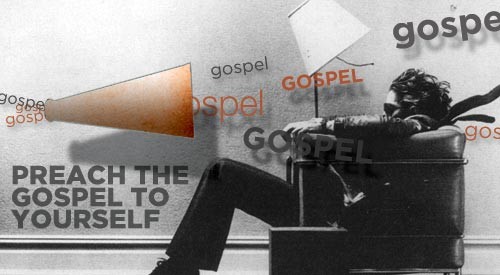
Preaching the Gospel to Ourselves?

preach
Should We Preach the Gospel to Ourselves?
Recently I had a good conversation with one of our church’s pastors about the idea of preaching the gospel to ourselves. It has become a popular manta, especially in the “gospel-centered” camps. But, for those of us who upheld the importance of preaching the gospel to ourselves (and one another), have we faced a couple of questions now being raised? First, does the NT commend something along the lines of preaching the gospel to yourself? Or, is that idea (not just the language) somewhat foreign to the NT? Second, if the NT does commend something similar to this concept, why is it worth emphasizing in our day and age? And third, when it comes to sanctification, is preaching the gospel to ourselves enough, or do we move past this initial step as we move into obeying God’s commands, working out our salvation, putting off and putting on, etc.? More questions like this need to be raised so that we’re thinking about our thinking. It’s all too easy to latch onto things that feel right, like being “gospel-centered” or “preaching the gospel to ourselves,” without asking questions about its importance, its meaning, and its effects. I’ll try to tackle each of those questions briefly.

Does the NT commend something similar to preaching the gospel to ourselves?
The language is not explicitly in the NT. On one side, this might give caution to over-estimating an extra-biblical idea. On the other side, specific language doesn’t have to be used in the Bible in order to hold good and necessary conclusions and consequences based on that language. Extra-biblical language can be very helpful in defining what we actually mean. The best example is the Trinity. The wording isn’t used, but the idea of their being one God, three persons, and each person being fully God is clear. So, while the language of “preaching the gospel to ourselves” isn’t in the Bible, I believe the idea behind it can still be found.

Our first model of preaching the gospel to ourselves is Paul’s example. In every NT letter Paul preaches the gospel to believers. He reminds and explains the gospel to them as the basis of why they both can and should make every effort to mature in holiness. He takes them back to the historical work of Jesus (according to the Scripture) and how it is for them (the message).
o Each letter begins either with an opening reminder of the gospel (Eph. 1:3-14; I Cor. 1:30) or the letter has a structure of preaching the gospel first before encouraging them to then live in light of it (See Rom. 1-8, 12-15; Eph. 1-3,  4-6).
o The fact that the NT letters are so full with explicit and implicit gospel-preaching to believers must mean the gospel needs to be remembered and rehearsed so that we know what we should do (ought) and that we really can do it now (can).
o Paul desires to preach the gospel to believers and churches he writes too (cf. Rom. 1:15; Phil. 3:1), not because they don’t know it already but because it must be massaged into our stubborn skulls.

Paul seems to urge Titus to exhort and rebuke the church in “these things” (3:15), which includes both the message of redemption and purification in Jesus (3:14) and the need to renounce ungodliness. See also the emphasis in 3:8 to insist on “these things, so that those who have believed in God may be careful to devote themselves to good works.” What are these things? Well it likely includes both the message of justification and renewal in Jesus (3:4-7) and the encouragements in Christ-likeness (3:1-3).

In Ephesians 4:15 Paul exhorts the church to speak the truth in love to one another as the means to mature in Christ. The truth we speak to one another (i.e., preach to one another) is primarily the gospel message about Christ’s person, work, and what we receive through him. This verse reminds us that we not only preach the gospel to ourselves as we meditate on its truth privately, but we preach the gospel to one another as we speak the truth in community. Here are two quotes drawing out what “truth” might mean here.
o “In this context, however, it conveys the more specific sense of accepting the truth of the gospel, speaking it out loud in the corporate gatherings of worship, talking about it with fellow believers, and upholding it firmly.”[1]
o “Accordingly, the apostle is not exhorting his readers to truthfulness in general or speaking honestly with one another, however appropriate or important this may be. Rather, he wants all of them to be members of a ‘confessing’ church, with the content of their testimony to be ‘the word of truth,’ the gospel of their salvation (1:13).’”[2]

Why Preaching the Gospel to Ourselves is Especially Important Today
If you agree with my conclusions above that the Bible supports the idea (or at least something close) of preaching the gospel to ourselves and one another, than the biblical justification is the best justification we have for doing so. However, I think it is especially needed in our current evangelical climate to preach the gospel regularly for at least these reasons. It’s not that this is only thing to preach to ourselves, and it’s certainly not that we only preach the gospel to ourselves, but as we move on to working out our sanctification in our daily lives we must do so with the gospel as our fundamental reason and motivation.

o We need to live daily with a reminder of our sinfulness and our corrupted nature from birth so as not to become prideful or self-reliant. And yet, the knowledge of sin that brings repentance is the same knowledge that leads us to find grace, forgiveness, assurance, and help through Jesus in the gospel. We must remember both who we were/are on our own, but even more so, who we are now in Jesus. The former keeps us humble and grateful and the latter reminds us we really are forgiven, loved, and equipped.
o We need this daily reminder because many see God as someone who will save them but doesn’t really like them unless they do all the right things. Many see God through the lens of how human relationships: recompense. We preach the gospel of free grace to remember God is not like us.
o We need this daily reminder because we’re performance-driven and self-reliant so we will assume we can mature in holiness by our own strength and we’ll then take the credit. The gospel puts us on our knees in brokenness, but it doesn’t leave us there. It picks us up off the floor so we can by God’s grace alone press on.
o We need this daily reminder because many are burnt out because all they’re told they should be doing as a Christian and they know how little progress is taking place. Our culture of busyness and accomplishment makes the Christian life feel like a fast-moving treadmill that runs them into the ground without taking them anywhere. The gospel leads to a life of risk and mission, but it doesn’t do it at the cost of our resting in Christ and relying on the Spirit to do the work through us.
o We need this daily reminder because we continually sin. Our ongoing sins require us to preach the gospel to ourselves (and others in community) to remind us of repentance, faith in Christ’s work, and the promise for help as we continue to press on. The gospel only needs to be preached as often as we still struggle with sin, but since that struggle leads to daily wounds we also need to daily apply the healing salve of the gospel.
o We need this daily reminder because we forget. We forget both what God has actually done for us and who we are now as a new creature in him. Our memory quite easily recalls our sin and is well tuned to hear the voices of others pointing out our failures. So, we preach the gospel of grace because its foreignness and our forgetfulness require a constant reminder of what God has said is true. This is why Paul is okay with reminders (Phil. 3:1) and repetition of the gospel even to believers (Rom. 1:15).

Is Preaching the Gospel to Myself All I Do?
We first looked at some biblical support for preaching the gospel to ourselves and one another. Then, we looked at a few reasons why we need to regularly be preaching the gospel to ourselves. We now come to two other related questions. Is preaching the gospel to ourselves the only motivation for sanctification? And second, is sanctification only a matter of preaching the gospel to ourselves? Or, in other words, if I simply preach the gospel to myself have I done all I need to do, and if I preach the gospel to others in community have I told them all they should know in order to mature in Christ-likeness? I think the answer to these questions is no.

First, the Bible includes a number of motivations for Christians to help energize their sanctification, including: gratitude, new ownership, promise of blessings and greater joy, hope of reward, assurance, duty, Jesus’ glory, fear of God, love to God and neighbor, etc. We should seek knowing more of these motivations and letting all of them increase our desires for following Jesus. One of the dangers of among some today is limiting our motivation to only our gratitude or freedom in justification. No doubt, that is a glorious truth that ignites our passion to follow Jesus, but it’s not the only one and so we should be careful to not speak as if it is.

Second, preaching the gospel to ourselves is neither the end-goal or sufficient when it comes to our sanctification. The gospel in the NT is preaching to unbelievers to bring them to saving faith Christ (generally speaking), while in the NT it’s most often preached to believers with the end-goal of them growing in Christ and loving him more. The gospel is our treasure and through Christ alone we’re justified, but the gospel is meant to lead Christians into holiness and mission. We should hold strongly to preaching the gospel to ourselves, but we also must not minimize or neglect the many imperatives in Scripture and the life we are called to live in Jesus. This life of sanctification is itself grace, both because we can finally do it through the power of the Holy Spirit and because we can do it as grateful sons and daughters of God rather than slaves trying to earn their keep. As we take further steps in maturing we aren’t moving past the gospel in the sense of letting it go, but we’re moving on in the sense that the gospel pushes us into something else. The gospel we preach to ourselves is the catalytic gospel propelling us into obedient and fruitful lives. The growing trend of fearing the imperatives in Scriptures, wrongly equating rules with legalism, and stopping at preaching the gospel to ourselves is a serious error that conveys a half-truth about grace and life in Christ.

Preaching the gospel to ourselves comes up short if it only reminds us of our justification in Christ without also nudging us towards the grace of progressive sanctification by the Spirit. The gospel not only holds out the promise of no condemnation but it promises us that God will write the law on our hearts, change our hearts, and leads us by His Spirit into a new way of living. We must preach the gospel to ourselves, including the realities of who we are and what we’ve received in Jesus Christ as well as the life of following Jesus we’re called to walk and his provisions for us walking it. The NT repeatedly tells us what we should do (imperative/ought) but always roots it in why we can do it (indicative/can). We must continually preach the gospel to ourselves so we do strive to grow but do so in light of God’s gracious working and power enabling us. This means we also should not shy away from emphasizing how we should live in Christ and the need for obedience and holiness. Grace properly understood gives the type of internal rest that energizes us to get to work.

Footnotes:
Image via Acts29 post.
[1] Clinton E. Arnold, Ephesians ECNT (Grand Rapids: Zondervan, 2010), 269.
[2] Peter T. O’Brien, The Letter to the Ephesians (Grand Rapids: Eerdmans, 1999), 311.

Lent: History, Cautions, and Benefits

For those groups—and there are a lot of them in Catholicism, Orthodoxy, and Protestantism—that hold to a liturgical calendar and its celebrated seasons and days, Lent begins the pilgrimage to Jesus’ cross and resurrection. For most in the West, the season begins with Ash Wednesday and takes place over the next 40 days (Sundays excluded). Can Lent be abused or misused? Yes, of course. Can Lent be observed in a helpful way? I think so. It’s certainly not prescribed in the Bible so we shouldn’t see it as a God-ordained means of grace or as required for Christians, but at the same time, if done in the right way it might be a helpful teaching opportunity that prepares our hearts to feast on the Bread of Life, Jesus. Here’s a very brief explanation as to what Lent is, what is dangerous about it, and what might be helpful about it.

Continue reading Lent: History, Cautions, and Benefits

Another Great Civil War Quote

emancipationday
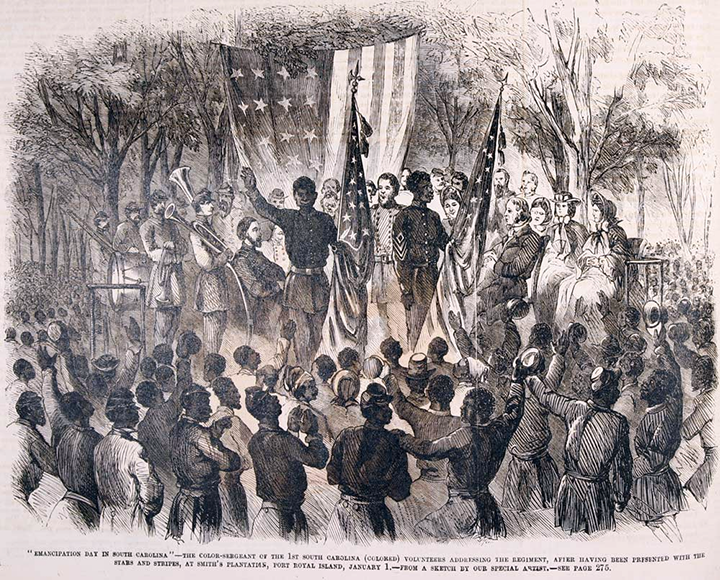
Last week I posted a beautiful quote written by Frederick Douglass where he captures what it was like for a slave to see ships of free men sailing in and out of port each day. Here is another great entry from the Civil War. Thomas Wentworth Higginson was Colonel of the 1st South Carolina Volunteers and a strong abolitionist. Here he captures part of the events at Camp Saxton on the evening of January 1, 1863. Lincoln’s famous Emancipation Proclamation went into effect on this first day of January. On this “Emancipation Day” 3 million slaves from the confederate states were given the legal framework for their freedom. One could argue about why Lincoln issued the Emancipation and Proclamation and why it was only for slaves in the confederate states, but those discussions don’t diminish just how celebratory a day this was for Black Americans. Most cared little about the details of the Proclamation. What they knew was it was a turning point for them and now, maybe for the first time, there is hope for a new level of freedom and personhood to them and their families. Even for those in states not given such freedom, the light in the distance finally shining dawned hope where only a hopeless darkness had prevailed.

On this Emancipation Day, there were celebrations in many places, but the following account form Higginson’s diary comes from Camp Saxton in South Carolina (see image above). It tells us the festivities of the day and the planned celebrations, but more importantly it gives us a sense of what it must have feel like for those people who tasted their bite of freedom.

“…About ten o’clock the people began to collect by land, and also by water,–in steamers sent by General [Rufus] Saxton for the purpose; and from that time all the avenues of approach were thronged. The multitude were chiefly colored women, with gay handkerchiefs on their heads, and a sprinkling of men, with that peculiarly respectable look which these people always have on Sundays and holidays. There were many white visitors also,–ladies on horseback and in carriages, superintendents and teachers, officers and cavalry-men. Our companies were marched to the neighborhood of the platform, and allowed to sit or stand, as at the Sunday services; the platform was occupied by ladies and dignitaries, and by the band of the Eighth Maine, which kindly volunteered for the occasion; the colored people filled up all the vacant openings in the beautiful grove around, and there was a cordon of mounted visitors beyond. Above, the great live-oak branches and their trailing moss; beyond the people, a glimpse of the blue river.

The services began at half-past eleven o’clock, with prayer by our chaplain, Mr. [James H.] Fowler, who is always, on such occasions, simple, reverential, and impressive. Then the President’s Proclamation [from September 22, 1862] was read by Dr. W. H. Brisbane, a thing infinitely appropriate, a South-Carolinian addressing South-Carolinians; for he was reared among these very islands, and here long since emancipated his own slaves. Then the colors were presented to us by the Rev. Mr. French, a chaplain who brought them from the donors in New York. All this was according to the programme. Then followed an incident so simple, so touching, so utterly unexpected and startling, that I can scarcely believe it on recalling, though it gave the key-note to the whole day. The very moment the speaker had ceased, and just as I took and waved the flag, which now for the first time meant anything to these poor people, there suddenly arose, close beside the platform, a strong male voice, (but rather cracked and elderly,) into which two women’s voices instantly blended, singing, as if by an impulse that could no more be repressed than the morning note of the song-sparrow,–

‘My Country, ’tis of thee,
Sweet land of liberty,
Of thee I sing!’

People looked at each other, and then at us on the platform, to see whence came, this interruption, not set down in the bills. Firmly and irrepressibly the quavering voices sang on, verse after verse; others of the colored people joined in; some whites on the platform began, but I motioned them to silence. I never saw anything so electric; it made all other words cheap; it seemed the choked voice of a race at last unloosed. Nothing could be more wonderfully unconscious; art could not have dreamed of a tribute to the day of jubilee that should be so affecting; history will not believe it; and when I came to speak of it, after it was ended, tears were everywhere. If you could have heard how quaint and innocent it was! Old Tiff and his children might have sung it; and close before me was a little slave-boy, almost white, who seemed to belong to the party, and even he must join in. Just think of it!–the first day they had ever had a country, the first flag they had ever seen which promised anything to their people, and here, while mere spectators stood in silence, waiting for my stupid words, these simple souls burst out in their lay, as if they were by their own hearths at home! When they stopped, there was nothing to do for it but to speak, and I went on; but the life of the whole day was in those unknown people’s song.”

A Few Links

Here are the links to a few recent things I’ve written for other websites.

Our church is hosting Dr. John Piper this weekend for our THINK|14 conference. To start tilling the soil of our hearts I provided two blogs.
Why Theology Matters…For Everyone
A Primer on Philippians

Here was an article giving three reasons the ascension matters for us right now. The Ascension: What’s Jesus Up To?

On this blog I did seven individual articles on ways God the Father loves us. I condensed them into a summary article for Gospel-Centered Discipleship.

Calvin on the Spirit and the Word

Cal

A portion of Calvin’s Institutes was written with “the fanatics” in view. These people were claiming direct revelations from the Spirit of God, often incompatible with God’s Word. Calvin’s response was a pastoral and theological defense of the inseparability of the Word and the Spirit.

“Therefore, the Spirit, promised to us, has not the task of inventing new and unheard-of revelations, or of forging a new kind of doctrine, to lead us away from the received doctrine of the gospel, but of sealing our minds with that very doctrine which is commended by the gospel.” (I.9.2)

“From this we readily understand that we ought zealously to apply ourselves both to read and to hearken to Scripture if indeed we want to receive any gain and benefit from the Spirit of God…But on the contrary, if any spirit, passing over the wisdom of God’s Word, foists another doctrine upon us, he justly deserves to be suspected of vanity and lying (Gal. 1:6-9).” (I.9.2)

“For by a kind of mutual bond the Lord has joined together the certainty of his Word and of his Spirit so that the perfect religion of the Word may abide in our minds when the Spirit, who causes us to contemplate God’s face, shines; and that we in turn may embrace the Spirit with no fear of being deceived when we recognize him in his own image, namely, in the Word. So indeed it is. God did not bring forth his Word among men for the sake of a momentary display, intending at the coming of his Spirit to abolish it. Rather, he sent down the same Spirit by whose power he had dispensed the Word, to complete his work by the efficacious confirmation of the Word.” (I.9.3)

“…Certainly a far different sobriety [than forsaking the Word for private revelations] befits the children of God, who just as they see themselves, without the Spirit of God, bereft of the whole light of truth, so are not unaware that the Word is the instrument by which the Lord dispenses the illumination of his Spirit to believers. For they know no other Spirit than him who dwelt and spoke in the apostles, and by whose oracles they are continually recalled to the hearing of the Word.” (I.9.3)