
One frustrating thing about the Christian life is how fickle our hearts prove to be. I’m amazed how I can start my day in Scripture soaring on the truths of God’s glory, and then by lunch I doubt whether God will come through for me. I can tell others about His goodness one day and then question His goodness the next. I’ve had seasons of spiritual dry spells where it felt like the dark clouds of life hid the sun of God’s presence, and then had seasons where the rays of God’s presence felt like they beamed directly on me. I can lay down my life in selflessness toward one person but act so selfish toward someone else. My mind can rest in God’s Word, only to have a windstorm of anxious thoughts sweep through with a trail of destruction.
When I look back over the last couple of decades of following Christ, I’ve seen God change me in big and small ways. My faith has grown, and yet there are also many times I’m reminded how shaky my faith can be. It can be discouraging and disappointing. The story of a disciple certainly isn’t about our faithfulness, but it’s about the faithfulness of God (2 Tim. 2:13). We remain sinners and saints in this life, made alive in Christ by God’s Spirit, and yet still haunted by indwelling sin. We must continue to submit our mind and heart to God. We must fight temptation and resist idols. We must confess and repent of our sin rather than growing comfortable with them. We stray from God and must continually return to Him
Part of what means it to be a follower of Jesus is to be an imperfect disciple. The Spirit is making us gradually more like Christ, but we also wander, doubt, and fail. We will all have seasons in the desert as well as seasons where we’ve acted foolish, been driven by worry, or walked too much in our own fallen flesh rather than the by the power of the Spirit. But how do we respond at these times? When we find ourselves overcome by fear and anxiety, overwhelmed by discouragement, wearied by our situation in life or the sin in our heart, or far from God and longing for His presence, what do we do? How do we return to the Lord? How do we regain spiritual strength when we’re weak?
David’s Story of Straying
David’s story in 1 Samuel 27-30 has all the marks of someone straying from God. 1 Samuel 27 opens with David listening to his heart, giving in to fear, and doubting God’s promises. Instead of trusting that God would deliver him from Saul (as promised), David became convinced Saul would kill him. Instead of inquiring of God, like he had done so often before, David failed to pray to God and trusted in himself.
There’s a noticeable absence of God from this part of David’s story and a notable deficiency on his end to seek God.
This led David down a path of aligning himself with Israel’s enemies—the Philistines—and committing a host of violent acts against others (1 Samuel 27). God providentially spared David from having to go into battle against Israel, but when David and his men returned to their base of Ziklag, they discovered it had been been burned, raided, and their families were kidnapped. While his soldiers had been loyal to this point, they’ve had enough. They began speaking of stoning David.
“David was greatly distressed” (1 Samuel 30:6). David’s wandering led him deep into a dark wilderness. He hit rock-bottom.
We Are All Straying Sheep
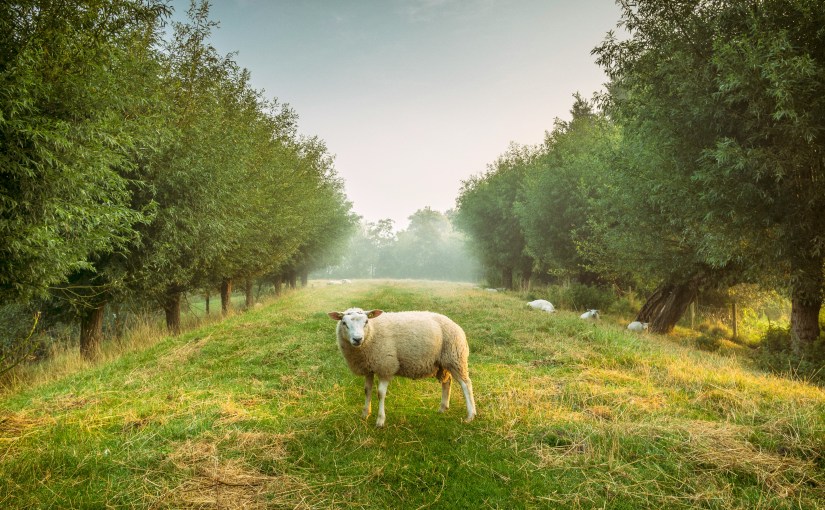
Before seeing where the story goes next, notice how David is portrayed as a fearful, wandering sheep. I don’t think David’s beliefs had changed, but he seemed to set his faith on the back burner as he operated out of instinct. He didn’t pause to ask what God wanted him to do or to let truth recalibrate what he thought and felt. He lived in survival mode, doing what made sense to him from one circumstance to the next.
David was just like us in his foolish decisions and fearful straying. None of us are immune to the effects of anxiety, discouragement, and distress. We all let our thinking and feeling at times lead us into short-sighted choices or rash steps. We can all stray like sheep when thunder strikes. Sometimes that veering from the path can be sudden and dramatic, but other times it’s subtle and slow. It’s not until we look back that we notice how far we’ve wandered from the path.
When we see ourselves in David, we realize how encouraging his story can be. If he felt great fear, if he wandered from the path, and if he made foolish decisions, and yet God extended grace to him and still used him in significant ways, then the same can happen for us.
The Good Shepherd seeks, finds, and brings back His sheep. No matter how far we run, what valley we drift into, or what thickets we get entangled in, God patiently and lovingly pursues us. He brings us back to Himself, back to the still waters and green pastures in His presence. Any believer who has wandered from God, however far and however long, has tasted the grace and goodness of the God who lovingly brings them home. He is steadfast in love, infinite in patience, and faithful in all His ways toward us.
Maybe you can recall seasons where you strayed like David. For whatever reason, your heart and thoughts shifted, and it led you down a path that you’re not proud of or that seems so foolish looking back. And like David, you know the grace and kindness of the God who did not forsake you there or give up on you.
Even in ordinary and small ways, we frequently drift from God. Every time we give in to fear, worry, anger, lust, selfishness, despair, pride, and worldliness, it’s because our thoughts and feelings have led us astray. Instead of being anchored to truth and trusting in God, our hearts and minds confused us or deceived us. Our thoughts and feelings betray us.
When I’m fearful about my circumstances, so often rather than rehearsing God’s promises I start to think about all the things that could go wrong. I try to seize control, I spiral into anxiety, or I get angry at others. I can make things worse by foolish decisions made when I’m ruled by fear and worry rather than faith in God. I can act impulsively and regret it. I can follow my gut, and then a few days later realize my gut didn’t have all the facts. When I’m discouraged and disappointed, instead of setting my heart on God, finding my joy and peace in Him, or reminding myself of all the blessings I have in Him, I sink deeper and deeper into the quicksand of discouragement by thinking about all the things I don’t have, what hasn’t worked out, what I don’t like about my circumstances, or even where I feel like God is failing.
When there’s something I want in life that God hasn’t given me, I take matters into my own hands and run after it. I might not pause to pray and ask God to supply what I need or desire. I don’t seek counsel from others. I don’t reflect on why God might not have given me this desire or if it’s truly what I need, but the shininess of that thing (that idol) has a hold on me. I can’t stop thinking about it or scheming to get it. I think my happiness or success is tied up in it. It often starts with a good desire, but it’s not long before the desire becomes a demand and I want what I want more than I want what God wants for me. And so this thing, not God, directs my path.
Or sometimes it’s just the busyness of life that takes me by the collar and walks me like a dog. I move from one thing to the next, never really asking if it’s the best thing. Or I’m so distracted and hurried that I neglect meaningful time in the Bible, in prayer, or with God’s people. I might say it’s a busy season, and my beliefs haven’t changed, but over time my walk with God gets knocked down on the priority list. It’s not blatant and distinguishable sin that’s led us far from God’s presence and path but it’s been a subtle shift over time as other things (often good things) have taken up our time and attention.
There are a lot of ways to wander from God. Not all straying looks the same. But none of us are immune to the effects of sin or the force of fear in our heart, so we should all be honest about how our hearts are prone to wander. And the less our thoughts are anchored in Scripture, the more likely we are to drift from God. The less our thoughts are rooted in God’s Word, the less our heart will be focused on God, and the more likely we are to stray. If we are not walking with God by renewing our mind in His Word, then we will wander from God with thoughts that run counter to His Word.
Restoration After Returning
Picking up the story where David was in great distress, we’re reminded that it often gets darkest before the light dawns. Like the prodigal son came to his senses and returned home (Luke 15:17), when David found himself lost in this dark and deep valley, he returned to God and strengthened himself in God (1 Samuel 30:6).
I think many of David’s psalms give us a sense of what it looked like for David to strengthen himself in God. It included confessing his sins and failures, clinging to God’s mercy, rehearsing the truths of Scripture, praying to God, remembering God’s attributes and promises, praising and thanking God, and resting in the steadfast love and grace of God to His people.
When David returned to God, he not only found strength (in God), and he not only found the help and guidance he so badly needed, but he also found himself being changed by God. David immediately began to pray to God, to be led by God, to be obedient by God, to be helped by God, and even to reflect God in the events of 1 Samuel 30. Not only does God deliver David and restore everything that had been taken from David, but we see God at work in restoring David.
David recognized that it was God, not David, who won the victory against the Amalekites and provided a rich bounty of provision for his army. The people called it “David’s spoil” (1 Sam. 30:20) but David made it clear that it was God’s spoil (1 Sam. 30:23). God’s grace to David made David generous in sharing everything God had given into their hands among both his soldiers and his neighbors. As he spread the wealth with other Israelite villages, he brought blessing upon God’s people.
David also reflected the justice, compassion, and wisdom of God. David not only led his army into victory but he showed great care for his weak and exhausted men who couldn’t fight (1 Sam. 30:21–25). He displayed discernment, wisdom, and leadership in how he handled the spoil situation and the selfishness of some of his soldiers. He was a peacemaker.
The picture of David in 1 Samuel 30 contrasts to the depiction of him when he drifted (1 Sam. 27:1–28:2). He was characterized by deception, lies, and violence when he wandered from God. But now that he walked with God, his character reflected God’s character.
David returned to God, and was not only refreshed by God and restored to God, but he began to reflect God in his words and actions. The grace and generosity David received from God flowed outward from David to those around him.
Encouragement to Stop Straying
We might be like straying sheep, but Christ assures us that none of His sheep are ultimately lost (John 10:28). We might feel far from God, but we are never out of His sight or beyond His care.. We might walk right into the desert’s prickly bushes or get stuck in a muddy pit, but the Good Shepherd comes to our defense, brings us from a place of danger to safety, and binds our wounds with gentleness and love. God is faithful and kind-hearted to us even when we are faithless and hard-headed toward Him.
David’s story encourages all of us who have strayed that God invites us to return to Him. We are indeed prone to wander, but God is full of mercy and grace. He is the loving Father who runs to meet us. He doesn’t shame us for where we’ve been but welcomes us to find what we’ve been looking for through His presence alone. He is full of extravagant grace.
As we return to God, we experience the reconciliation and restoration we long for. We exchange our running for resting. We give up on trusting in ourselves and receive the wisdom and guidance of God. We stop straying and allow ourselves to be led by the Lord. We experience God’s strength in our weakness, God’s joy in our sorrow, and God’s love despite our sin.
Return to God. Stop the straying. Exchange the restlessness of being a wanderer on the road with the rest of being at home with the Father.


