
 God in his power, his sovereignty, his might, his greatness, and his rule gives great hope to the Christian that he can be trusted and relied upon. It is truth in the Bible about our God that we must know and that will carry us through many storms. It promotes a reverential fear in the hearts of creatures towards the Almighty Creator and humbles us in his presence. The Reformed tradition in our day has done an excellent job of teaching and holding up the sovereignty of God. For that they are to be thanked and we would do well to store up these truths in our hearts again and again. In the midst of a storm, in the midst of life’s uncertainty, and in countless other circumstances we can anchor ourselves to this unshakeable God when we are utterly shaken.
Continue reading Where the Reformed today can learn from Jonathan Edwards
God’s Vision for Multiplication

One of my favorite websites and a go to resource on discipleship, Gospel-Centered Discipleship, posted one of my blogs yesterday. You can read it here.
Happy, Happy, Happy: Jonathan Edwards and Duck Dynasty
 When I thought about happiness Phil Robertson came to mind. That might seem odd but I can see him with a thumbs up giving one of his famous lines in his steady voice: “Happay! Happay! Happay!” The second thing that came to mind are some recent Jonathan Edwards quotes I’ve come across. Now if only I could get a picture of Edwards overlaid by an audio-clip of Phil saying “happy, happy, happy” I’d be set.
Continue reading Happy, Happy, Happy: Jonathan Edwards and Duck Dynasty
John Owen on Contemplating the Glory of Christ
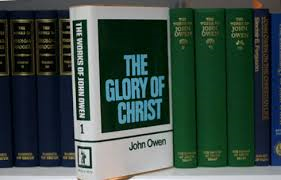
John Owen penned maybe the most well-known working on fighting sin, On the Mortification of Sin, and also maybe the greatest work on spiritual communion or fellowship with God—On Communion with God. As his life came to a close he wrote The Glory of Christ. What’s interesting about that is in this final work he believed the most important thought (and practice) for the believer’s growth and transformation in Christ was provided. More than fighting sin, more than spiritual-mindedness, and more than all other things, beholding the glory of Jesus Christ was not only our greatest reward but our greatest need. Seeing the glory of Jesus infuses all other disciplines and practices and it is the greatest thing to bring backsliders back, to create worship, to promote holiness and mortification, and to lead to our joy in God. Here are a few thoughts from the last three pages of the final discourse he wrote on the glory of Christ.[1]
Continue reading John Owen on Contemplating the Glory of Christ
John Owen on Elements of Repentance & Sovereign Grace
In two discourses attached to The Glory of Christ John Owen writes to backsliders—or those in spiritual decay—so they might see how grasping hold of Christ through God’s gracious promises in repentance and faith is the means to see our hearts revived. God desires such and has provided the way for our renewal. “The work of recovering backsliders or believers from under their spiritual decays is an act of sovereign grace, wrought in us by virtue of divine promises….Because believers are liable to such declensions, backslidings, and decays, God has provided and given to us great and precious promises of a recovery, if we duly apply ourselves unto the means of it” (Owen, I:454-55).
Continue reading John Owen on Elements of Repentance & Sovereign Grace

Identity in Christ Statements in Colossians
Below is an excerpt from an Appendix from my book Finding Satisfaction in Christ: A Devotional Study of Colossians. The book walks through Colossians a few verses at a time, explaining and applying the passage in a Christ-centered way. You can purchase the book on Amazon in paperback or Kindle. Here’s day one to give you a feel for the book.
As I’ve been studied Colossians, I’ve been amazed by the glorious, sweeping statements about the supremacy and sufficiency of Jesus Christ. Colossians is all about clarifying who Jesus is and why nothing and no one is needed beyond him. No additives in necessary here.
Continue reading Identity in Christ Statements in Colossians
Pentecost (Part 4 of 4): Deploying the Church
 This is the fourth post on Pentecost. Part 1 was designed to give a little OT background and a general overview. Part 2 demonstrated how Pentecost tells us that Jesus is the vindicated and exalted Messiah. Part 3 reminds us that Pentecost marks the day Jesus gifted his bride the Spirit and what a gift he is. This installation, part 4, finishes up the short series by showing how Pentecost equips and sends the Church out on her mission. I’ll admit, I’ve essentially repurposed a past blog on Pentecost and the Kingdom, but I think it fits very well here and helps round out the picture I’m trying to draw.
Pentecost not only convinces us of Jesus’ identity and conveys to us the gift of the Holy Spirit, but it also creates a Church on mission to spread the gospel and see God reclaim image-bearers throughout the world.
Continue reading Pentecost (Part 4 of 4): Deploying the Church
Pentecost (Part 3 of 4): The Spirit of Pentecost
The title of Frederick Dale Bruner’s book on the Holy Spirit carries the subtitle, The Shy Member of the Trinity. Maybe a better title is Francis Chan’s The Forgotten God. Both titles suggest how little attention we give to the Holy Spirit. To a degree, the Holy Spirit comes not to make a big deal about himself but to point us back to the Son and the Father. Rather than being the shy member of the Trinity, we might think of the Spirit rightly as the one who is more “behind the scenes” and yet ever-present and always working. From the moment God awakens our hearts by the Spirit our entire Christian life is lived by the influence and help of the Spirit. We are nothing without him and we have nothing without him.
Continue reading Pentecost (Part 3 of 4): The Spirit of Pentecost
Pentecost (Part 2 of 4): It’s A Big Day for Jesus Too
For the few who still remember it, Pentecost is the Christian holiday 50 days after the resurrection. It began in the OT as the Feast of Weeks and is brought into the NT when Jesus pours out the Spirit upon the Church. So, as many then think, Christmas and Easter are about Jesus but Pentecost is all about the Spirit. Right? It is about the Spirit and we should take advantage of this day to remember why Jesus thought the coming of the Spirit was such a good thing for us (Jn. 16:7). But, often neglected is just how pivotal a day this was in the story of Redemptive History as well as what it tells us about Jesus. What might surprise is just how much Pentecost teaches us not only about the Spirit but about the Messiah, Jesus. The Christ’s incarnation, his holy life, his sacrificial death, his triumphant resurrection, his exaltation at the ascension, and his giving of the Spirit at Pentecost all prove to be of great significance for who Jesus is as Lord.
Continue reading Pentecost (Part 2 of 4): It’s A Big Day for Jesus Too
Pentecost (Part 1 of 4): Out with the Old and In with the New
June 8, fifty days after Passover, marks the day of Pentecost. In the Old Testament story God delivered in might and miraculous ways His people from Egypt on the day of Passover. The people took the life of a lamb and marked the doors of their homes with blood, and where God saw the blood of a life taken He spared the lives of those under its covering (Ex. 12:1-13). Every year their deliverance is celebrated at Passover by eating unleavened bread, marking the speed in which they got of Dodge…or Egypt.
Seven weeks later was the Feast of Weeks (Lev. 23:15-22), otherwise known as the Feast of Harvest (Ex. 23:16) or Pentecost. This celebration provided God’s people an opportunity to take the first two loaves from the harvest God provided and give them back to Him. The harvest reminded them that they now lived in God’s good land as freed people. The firstfruits represented the whole, so that all of the harvest was clearly recognized as God’s. He gives and we steward, enjoy, and say thanks. In this covenant relationship what’s ours is His and what’s His is ours and we recognize that in the Feast of the Harvest. It was also on this day that God descended upon His people at Mt. Sinai, giving them His Law. They were not redeemed from slavery to be left on their own but God’s Law was meant to organize them, consecrate them, humble them, and teach them how to live. This day of Pentecost in the Old Testament screams of significance: the descent and dwelling of God with His people, the giving of Law to guide the people, a reminder of the goodness of life in God’s new land, and a representation that God does bless and all that we have is truly His.
Continue reading Pentecost (Part 1 of 4): Out with the Old and In with the New
 indycrowe