The Coming King Arrives

header_kingdom
[This is Part 3 of a series on the Kingdom of God. See Part 1 and Part 2.]

The Coming King Arrives
The Gospel of Mark is a non-stop action story. Mark moves with brevity from scene to scene, often carried along by the words “and” or “immediately.” The very first scene of his Gospel brings into focus John the Baptist, a Bear Grylls like character living in the wilderness eating from nature’s original fresh market. John is a prophet bridging the two testaments, but more importantly, he fulfills the OT role of the Messianic forerunner. According to the OT prophets, we’ll know the Messiah is coming when an Elijah like figure prepares the way by calling the people to repentance (Is. 40:3; Mal. 3:1; 4:5-6). All four Gospels highlight the ministry of John the Baptist because anyone familiar with the OT would have expected such a character to precede the Messiah. In older kingdoms one would expect heralds to enter a city before the King so the people could prepare and pay attention. The message of John is to repent, to turn from your ways and your idolatry, and make room for the King. The response is a corresponding baptism symbolizing such purification. The reason for such a declaration: the kingdom of heaven is at hand (Mt. 3:2). As we’ve seen, the OT expectations of a Messiah and King and the role of John the Baptist as heralding the arrival of this Christ make it clear that this kingdom of heaven is the arrival of God’s anointed Messiah and Son of David.

Jesus, the Christ, proclaims a message similar to John, only he points to himself as the one John had spoken of (Mt. 4:17). Jesus calls people out of their individual, tiny kingdom and invites them into the Kingdom of God—a Kingdom available to them only through submission to the King himself.[1] The birth, life, teachings, miracles, death, resurrection, and ascension are retold in such a way to demonstrate that Jesus is the promised Messiah, the Christ. Through the events themselves and how they’re narrated, the gospel writers are each describing in their own way “the story of how God became king of the world.”[2]

Two Misunderstandings on the Kingdom
Some dispensationalists have misunderstood Jesus’ message of the kingdom in the NT. They say that Jesus was offering a physical, political, national kingdom to Israel—since they say all OT prophecies to Israel must be fulfilled in a literal (i.e., physical) manner—but since he was rejected the kingdom of God has been postponed until he returns (for a millenial kingdom). Two of the problems with this view must be expressed to help us better grasp Jesus’ understanding of the kingdom. First, Jesus seems to understand kingdom from the outset in a different way than the Jews in his day (and present dispensationalists). Second, Jesus and the NT as a whole do not speak of the kingdom as wholly future—and certainly not postponed—but as inaugurated, present, and active. Let’s look at each in turn because these are key to understanding the kingdom of God.

1) What Kind of Kingdom Did Jesus Offer?
First, as been hinted at, the clash between the Jews and Jesus comes in part because they seem to have different understandings of the kingdom. The Jews could only accept a kingdom that was physical and earthly, where the Messianic king brought defeat to the worldly power of Rome and restored glory to Israel. Jesus does in fact see himself fulfilling the OT understanding of the Messianic King, but for him it appears different than many Jews anticipated. As I’ve said, this should not be surprising because the Jews in Jesus’ day missed the boat quite often when it came to interpreting the OT rightly. Jesus’ kingdom “answers to the great OT expectation. What Jesus announces is the realization of Israel’s hope, the fulfillment of the covenant promises made to the fathers; the new and final order at the end of history has arrived at last with Jesus.”[3] Yet, he describes it as coming in organic, hidden, and spiritual ways that were unexpected. This is not to say that Jesus never uses external metaphors to speak of the kingdom—and as we’ll see there is a future element to it—but he primarily understands it as a spiritual kingdom where God’s rule extends over the lives of His rescued people.

One example of this would be Jesus’ response to the religious leaders of his day. When the Pharisees asked when the kingdom would come, Jesus says “The kingdom of God is not coming with signs to be observed, nor will they say, ‘Look, here it is!’ or ‘There!’ for behold, the kingdom of God is in the midst of you” (Luke 17:20-21). In the parables, Jesus repeatedly explains the kingdom of God in internal, spiritual, and organic terms not external, political ones. “Both the present reality and the organic-spiritual character of the kingdom are most clearly taught in the great kingdom parables (Matt. 13; Mark 4; Luke 8)”.[4]

There is a distinction here between the kingdom Jesus brought and the kingdom the Jews wanted. We also see this in the primary enemy of the kingdom in mind, not a national one but a spiritual one (Mt. 12:28; Lk. 11:20). “What forms the contrast of God’s kingdom in Jesus’ mind is never any political power, e.g., that of Rome, but always a superhuman power, viz., that of Satan.”[5] When Jesus says, “My kingdom is not of this world,” (Jn. 18:36), he doesn’t speak of this other-worldly kingdom as the Plan B or backup-kingdom but as the very nature of the kingdom he came to bring.

Beginning with the Gospels and throughout the NT, the kingdom of God is seen as having been inaugurated and now actively carrying on under the rule of Jesus Christ. No NT author speaks as if the current kingdom is anything other than the kingdom alluded to in the promises and prophecies of the OT. Christ has been exalted to the right hand of the Father and has poured out his Spirit upon the people as the power of the kingdom (Acts 2). This kingdom is the kingdom of the New Covenant and has brought the ‘age to come” and the “new creation” into the present day. When we consider the teachings of Jesus on the kingdom he has brought—not as an offer dependent on their acceptance but as a reality dependent on his Messianic victory—and the rest of the NT teaching that we’re now citizens in this kingdom, then we must conclude that the kingdom of God in Christ now looks different than many of the Jews expected (I Cor. 4:20; Col. 1:13). And, this should help formulate our theology so the kingdom we live in already and the kingdom not-yet in its consummate form are understood based upon its Christological fulfillment.

2) The Kingdom Has Come and Is Coming
The second misunderstanding of the kingdom in many people’s minds is that it’s wholly future and therefore postponed. This theory is usually dependent on the first mistake. If one cannot hear Jesus’ teaching on the kingdom because they’re only focused on an external, physical kingdom then they will have to say the kingdom is all in the future. The NT clearly teaches that the kingdom has come—in part—and so this view has become unpopular among most theologians today. Jesus does not settle for a second-class spiritual kingdom for Jews and Gentiles, waiting for the real kingdom to come in a physical manifestation only in Jerusalem.

The later section on Pentecost and the Kingdom will provide further support to the fact that the kingdom has come, but we’ll move forward by unpacking the already-not-yet idea of the kingdom. The NT teaches that with the resurrection-ascension of Jesus he has taken his place on the throne of David, which is to say that the New Covenant Kingdom is the Kingdom of God under the rule of Jesus. This kingdom is here in an inaugurated form, but equally important in the NT is the fact that there still remains a future, fully consummate aspect to the kingdom. Michael Horton writes, “As difficult as it is to hold both simultaneously, the New Testament eschatology indicates that the kingdom of Christ is present now but not yet in its consummated form.” [6]

One book or one NT author might stress more of what is present (realized) or what is still to come (unrealized), but the NT as a whole teaches an already-not-yet scheme where the kingdom has come and will come. Jesus has inaugurated (launched) it but will one day consummate (finish) it. “These present and future aspects cohere not as two or more kingdoms but as the one, eschatological kingdom arriving in successive stages or installments.”[7] One installment is primarily spiritual and hidden and one will be a physical kingdom over all of creation. The apostles preached the good news of the kingdom because they realized Jesus’ kingdom was what they had been waiting to arrive. It’s not the good news of a wholly future kingdom to come and it’s not the disappointed news that they had to settle for a spiritual kingdom because Jesus’ plan A got squelched. Instead, part of the confusion in the first century and still today is that we don’t listen to the kingdom Jesus describes. Instead, many bring their assumed expectations from the OT of a kingdom that can only be physical and so this framework obscures the NT teaching on the kingdom. We will see this more clearly in our next post by outlining the two stages of the kingdom’s coming.

I want to briefly mention two reasons why this matters. First, we must read the Bible as progressive revelation. This means that the Bible is like other stories in that as the narrative unfolds we have more details and clarity to help us look back. So, while the NT does not change the OT story and they should not be read in conflict, we should allow the NT to helps us interpret the OT. This is an overgeneralization of course, but one of the problems many covenant theologians have with dispensationalists is they often fail to allow the NT to give us clarity as to what the OT was pointing towards. The OT should inform our understanding of the NT but it shouldn’t strain seemingly clear NT teachings because of our need to see it fulfilled in physical ways (literal) exactly as stated. Second, the type of kingdom Jesus brings rebukes our constant seeking of glory. The kingdom of Jesus now is hidden and aims first at transforming hearts and bending wills to the authority of Jesus. The Jews wanted a kingdom that exalted them not want that called for them to serve others or remain under the rule of Rome. It’s in all of our hearts to want a kingdom right now of prestige, power, and glory among other people. The kingdom of Jesus is all about Jesus, so while we might share in his honor and victories through union with him we should not expect or want the world—who doesn’t recognize his kingdom—to sing our praises.
Frederick Douglass Quote

Frederick Douglas
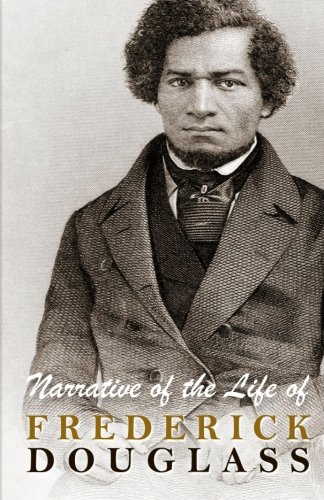
This is a beautiful quote from the Narrative of the Life of Frederick Douglass. Douglass wrote this himself as a 26 year old. The language is beautiful in its descriptions and emotions, and as the reader you can imagine some of what he was seeing and feeling at the time. This brief section is from Chapter 10 and is when he was a slave under Mr. Covey near the Chesapeake Bay.

“Mr. Covey succeeded in breaking me. I was broken in body, soul, and spirit. My natural elasticity was crushed, my intellect languished, the disposition to read departed, the cheerful spark that lingered about my eye died; the dark night of slavery closed in upon me; and behold a man transformed into a brute!

Sunday was my only leisure time. I spent this in a sort of beast-like stupor, between sleep and wake, under some large tree. At times I would rise up, a flash of energetic freedom would dart through my soul, accompanied with a faint beam of hope, that flickered for a moment, and then vanished. I sank down again, mourning over my wretched condition. I was sometimes prompted to take my life, and that of Covey, but was prevented by a combination of hope and fear. My sufferings on this plantation seem now like a dream rather than a stern reality.

Our house stood within a few rods of the Chesapeake Bay, whose broad bosom was ever white with sails from every quarter of the habitable globe. Those beautiful vessels, robed in purest white, so delightful to the eye of freemen, were to me so many shrouded ghosts, to terrify and torment me with thoughts of my wretched condition. I have often, in the deep stillness of a summer’s Sabbath, stood all alone upon the lofty banks of that noble bay, and traced, with saddened heart and tearful eye, the countless number of sails moving off to the mighty ocean. The sight of these always affected me powerfully. My thoughts would compel utterance; and there, with no audience but the Almighty, I would pour out my soul’s complaint, in my rude way, with an apostrophe to the moving multitude of ships:-

‘You are loosed from your moorings, and are free; I am fast in my chains, and am a slave! You move merrily before the gentle gale, and I sadly before the bloody whip! You are freedom’s swift-winged angels, that fly round the world; I am confined in bands of iron! O that I were free! O, that I were on one of your gallant decks, and under your protecting wing! Alas! betwixt me and you, the turbid waters roll. Go on, go on. O that I could also go! Could I but swim! If I could fly! O, why was I born a man, of whom to make a brute! The glad ship is gone; she hides in the dim distance. I am left in the hottest hell of unending slavery. O God, save me! God, deliver me! Let me be free! Is there any God? Why am I a slave? I will run away. I will not stand it. Get caught, or get clear, I’ll try it. I had as well die with ague as the fever. I have only one life to lose. I had as well be killed running as die standing. Only think of it; one hundred miles straight north, and I am free! Try it? Yes! God helping me, I will. It cannot be that I shall live and die a slave. I will take to the water. This very bay shall yet bear me into freedom. The steamboats steered in a north-east course from North Point. I will do the same; and when I get to the head of the bay, I will turn my canoe adrift, and walk straight through Delaware into Pennsylvania. When I get there, I shall not be required to have a pass; I can travel without being disturbed. Let but the first opportunity offer, and, come what will, I am off. Meanwhile, I will try to bear up under the yoke. I am not the only slave in the world. Why should I fret? I can bear as much as any of them. Besides, I am but a boy, and all boys are bound to some one. It may be that my misery in slavery will only increase my happiness when I get free. There is a better day coming.’

Thus I used to think, and thus I used to speak to myself; goaded almost to madness at one moment, and at the next reconciling myself to my wretched lot.”

The OT Backdrop to Jesus’ Good News of the Kingdom

header_kingdom
[This is Part 2 of a series on the Kingdom of God. See Part 1.]

The Backdrop to Jesus’ Good News of the Kingdom
At the very outset of Genesis 1 there is kingdom language for both God (as High King of all) and Adam (as God’s representative king on earth). The language of “image” parallels other Ancient Near Eastern customs when a king would set up his image throughout the kingdom as a representation and reminder of who ruled.[1] God gives Adam a place (kingdom land) and tells him to exercise dominion (kingly rule) and spread (kingdom expansion) throughout the whole earth. Adam and Eve fail to protect the kingdom and even try to stake their claim to God’s throne so they’re exiled from Eden.

Throughout the OT this kingdom theme remains an important part of the storyline.[2] Israel becomes dissatisfied with God alone being their king so they cry out for a physical king to rule over them. This becomes a source of struggle as throughout their history Israel is largely governed by corrupt kings—both from within and without. Along the way, there are sparks of light pointing them to the need for and promise of a great King, a son of David who will rule forever in righteousness and justice, punishing God’s enemies and bringing salvation to His people (2 Sam. 7; Ps. 2, 110). As the OT storyline begins nearing its end (or the beginning), the Prophets voice the ever-increasing rumble of the remnant wanting their King (Is. 11:1; Jer. 33:15; Zech. 6:9-14; 9:9). “The coming of the King…would thus be the focal point of the great deliverance.”[3]

Although the NT phrase of “kingdom of God” isn’t used in the OT it should be clear by now that the ideas were fundamental to Israel’s theology and are a key stream in the Bible’s storyline. Richard Gaffin highlights two dimensions of kingdom in the OT, which parallel two dimensions in the NT. First, there is a “general and eternal kingship”, where God is King over all since He is Creator of all (Ps. 47:2; 103:19; 145:13).[4] Second, there is a “covenantal kingship,” where “God is the king of his covenantal people, Israel” (I Sam. 12:12; Is. 41:21; 43:15).[5] The Jews, therefore, anticipated a coming King who would rescue Israel from exile and reestablish Israel as God’s light to the nations. This Kingdom would bring in the new age and the OT prophets see it as the dawning of a new creation.

Clashing Views of the Kingdom
With this OT history in mind, when Jesus and John the Baptizer speak about the kingdom of God it is not something new and unheard of but something old and hoped for. There wasn’t a birthday party one year where the cousins got together and came up with framing Jesus’ ministry around a clever concept they created, kingdom. “Our Lord did not come to found a new religion, but simply to usher in the fulfillment of something promised long beforehand.”[6] Part of the clash between Jesus and the Jews is what the proper understanding of kingdom is and what it should look like. Jesus brings a kingdom that is not first political but spiritual. The conflicting views on what kingdom should be points us to the reality that first-century Jews had a concept of kingdom, so when Jesus and his followers preached the kingdom of God it is expected that their audience would have OT expectations and categories in their minds. Thomas Schreiner summarizes what those expectations might have been.

“Those hearing Jesus did not ask for a definition of the kingdom. They understood him to be proclaiming the dawn of a glorious new era in which Israel would be exalted and the nations made subservient to Israel’s God. The Lord would reign over the whole earth, the son of David would serve as king, and the exile would be over. The new covenant would be fulfilled, God’s people would keep his law, and the promised new creation would become a reality. The Lord would pour out his Spirit on all flesh, and the promise to Abraham that all nations would be blessed, to the ends of the earth, would become a reality.”[7]

As we move forward in looking into the NT teaching on the Kingdom of God we must remember this backdrop so we don’t think Jesus speaks on the kingdom in a vacuum. The OT anticipates the coming of the King and a Kingdom. The Jews who reject Jesus not only refuse the King but they repudiate his understanding of the kingdom itself. Jesus and the NT authors, however, describe the “mystery” (secret)[8] of the kingdom of God which came to us in Jesus’ life, death, resurrection, and ascension as fulfilling the OT expectations while doing so in a way most Jews might not have expected. This shouldn’t surprise us, since time and time again we see the Jews misunderstanding the fullness of the Scriptures as they replace the agenda of God’s kingdom with their own agenda.

In light of the notion of kingdom being fraught with political, earthly, and material expectations Jesus could have chosen a term less prone to confusion or misunderstood expectations. However, kingdom theology belongs to God and is at the heart of Scripture’s story and Jesus’ identity and mission. It could even be that Jesus also uses the term exactly to undercut and change their misguided assumptions on what they’re waiting for and what God promised in the Scriptures. As we make our way through the pages of the Bible’s story we’re often pleasantly surprised as God’s ways of bringing about his promises goes beyond what we had imagined or expected. So, while OT and Jewish understandings of kingdom are helpful, it is through their Christological fulfillment in the NT that we have greater clarity on its meaning. As John Flavel wrote, “Even so the right knowledge of Jesus Christ, like a clue, leads you through the whole labyrinth of the scriptures.” [9]

Application
In order to keep things brief I won’t be unpacking a lot of direct application as we move forward. However, two immediate applications can be mentioned here for why what’s been written even matters. First, since the kingdom of God is a primary theme in the Bible it will help our understanding of the Scripture, God’s ways, and Christ’s person and work if we better understand the kingdom of God. If we simply choose to ignore the kingdom of God or to allocate it wholly to future things to come then we’ll miss out on our reading of both testaments. Second, this is a good reminder that all of life is lived with the tension of who will be king. God creates us to live under His rule and then to mirror Him to the world. The temptation for man in the Garden of Eden and ever since has been to live under no one’s authority but our own—to crown ourselves as king. Everyone will live with someone as king, and a deeper understand of the kingdom of God under Jesus will help us live faithfully with him and under his gracious rule.

Footnotes:
[1] T. Desmond Alexander, From Eden to New Jerusalem (Grand Rapids: Kregel, 2008), 76-79.
[2] For a good survey of kingdom in the OT, see: Graeme Goldsworthy, Gospel and Kingdom (Crownhill: Paternoster Press, 1981), 58-103; Peter J. Gentry and Stephen J. Wellum, Kingdom through Covenant (Wheaton: Crossway, 2012).
[3] N.T. Wright, The New Testament and the People of God (Minneapolis: Fortress Press, 1992), 320.
[4] Richard B. Gaffin, “Kingdom of God,” in New Dictionary of Theology, ed. by Sinclair B. Ferguson, David F. Wright, and J.I. Packer (Downers Grove: InterVarsity Press, 1988), 367. See NT parallels to this dimension of kingship: I Cor. 15:27; Eph. 1:22; Heb. 2:8.
[5] Ibid., 367. See NT parallels to this dimension of kingship: Mt. 21:5; 28:18; Acts 2:24-36.
[6] Geerhardus Vos, “The Kingdom of God,” in Redemptive History and Biblical Interpretation, ed. by Richard B. Gaffin Jr. (Phillips: P&R Publishing, 1980), 304.
[7] Thomas R. Schreiner, New Testament Theology (Grand Rapids: Baker, 2008), 45.
[8] See Mark 4:11. Geerhardus Vos writes, “This mystery, this new truth, we may find in the revelation that the kingdom is realized gradually, imperceptibly, spiritually, for in comparison with the Jewish exclusively eschatological expectations this was so novel and startling a thought that it might be fitly called a mystery.” Vos, “The Kingdom of God,” 307.
[9] John Flavel, The Fountain of Life in The Works of John Flavel, volume I (Carlisle: Banner of Truth, reprinted 1997), 34.

Kingdom of God Intro: Jesus’ people in his kingdom under his rule

header_kingdom
The Kingdom of Jesus: His Rule, His Place, and His People
“Though we do not have kings in America, or want them, our unconscious mind both has them and wants them. We all know what a true king is, a real king, an ideal king, an archetypal king. He is not a mere politician or soldier. Something in us longs to give him our loyalty and fealty and service and obedience. He is lost but longed for and will some day return, like Arthur.”[1]

The Bible is the story of kings and kingdoms through and through.[2] From Genesis 1 when God commissions his image-bearers to exercise dominion until Revelation 21-22 when Jesus restores a kingdom on the new earth, the whole story smells thick with the aroma of kingdom. And yet, in the opening quote Peter Kreeft pins down an interesting reality that has haunted American evangelical theology.[3] Because we are a people who prize democracy—which means we dislike, dread, or don’t understand kings—American churches have taught very little about “the kingdom of God.” Not that this is the only reason we’ve avoided teaching on the kingdom of God.[4]

The shock of it all is that we haven’t downplayed a theme on the margins of the Bible but one of the primary themes in the NT—and the Bible as a whole. It’s clear that for Jesus, the Kingdom of God was both at the heart of his teaching and his role. John the Baptist prepares the way for Jesus by preaching that the kingdom is nearing (Mt. 3:2). Jesus tells the Jews—who would have heard him with Messianic and Kingly expectations from the OT—that the kingdom is now among them (Lk. 11:20; 17:21). He commissions his disciples before and after the resurrection to preach the good news (gospel) of the kingdom (Lk. 9:2; Acts 1:3). In the Epistles, the exact phrase “kingdom of God” becomes less prominent but the same ideas are retained (Col. 1:13; Heb. 12:18-29). All of that to say, if the Kingdom of God was a priority in Jesus’ teaching and mission, and if it’s at the heart of NT theology, then we should probably make it a priority in our understanding of the NT.

A thorough investigation of kingdom would require tracing its importance and development through every epoch, as well as more in-depth exegesis on a host of NT passages rich with a theology of the kingdom. That can’t be done here—and others have already done it—so I will try to give a fast-break summary of major ideas and descriptions of kingdom in the NT. I will also be arguing for the present (already) aspect of Jesus kingdom being the Davidic kingdom Israel had been looking for. My hope is that by providing a basic framework of the kingdom of God we can begin to take next steps in understanding and then living in light of Christ’s Kingdom we are a part of right now.

A View from the Chopper
Recently I’ve enjoyed doing travel research. I’m a huge fan of history but also like good food, different cultures, and beautiful sights. Researching a location usually begins with the 30,000 foot view. What are the eye-catching zoomed out views of a worthy site (city, landmark, scenery)? How is the place generally described and what gives you a basic feel for the place? It’s similar to a helicopter tour that shows you the city as a whole. But, soon after that, you have to start getting into specifics. What are the specific buildings to see, where is a good hotel, where do I get on a bus? The helicopter view is great in its breadth but walking in the streets is where you really see the depth of a city. This summary will start with the helicopter view and then later on allow us to start navigating the roads and stepping into the must see landmarks when it comes to the kingdom of God. As we take this tour, there will be sites I don’t have the time to point out—not because they aren’t important—so you’ll just have to go back and check them out on your own.

Where We’re Headed
There is much to be said so I will unpack this important idea in 7-8 posts. If you stick with this you will not be an expert on the kingdom of God, but, you will hopefully know a little bit more than when you started. I’ll be honest up front, I’m primarily summarizing a Reformed understanding of the kingdom of God in the NT in its present (already) form, and making a theological defense for why this present kingdom is the promised Davidic kingdom. Here’s a summary of the upcoming posts.

• The OT backdrop on kingdom
• Two misunderstandings on the kingdom
1) Jesus fundamentally understood the kingdom of God promised in the OT differently than the Jews of his day.
2) The kingdom is already present in a real sense and is not wholly future
• The already-not-yet temporal pattern to the kingdom
• How the kingdom of God could be described
1) Working off of Graeme Goldsworthy: God’s people in God’s place under God’s rule
2) Working off of Geerhardus Vos: It’s theocentric, powerful, righteous, and based on God’s graciousness.
• The importance of Ascension to understanding that it is the Davidic Kingdom
• The importance of Pentecost to understanding that it is the Davidic Kingdom
• The Kingdom of God is the eschatological new creation kingdom

Footnotes:
Header image courtesy of the images & graphics Jedi, Greg Pilcher.
[1] Peter Kreeft, The Philosophy of Tolkien (San Francisco: Ignatius Press, 2005), 44.
[2] The word for “kingdom” is used 162 times in the New Testament.
[3] Kreeft does not here make the connection between American democracy and the misunderstanding and downplaying of kingdom from the Bible. In the beginning of the section on Kingdom, Faithmapping does hint at the connection. Daniel Montgomery and Mike Cosper, Faithmapping (Wheaton: Crossway, 2013), 29-30.
[4] Two other reasons could be mentioned. First might be our need for proof texts where the word “kingdom” is used rather than being able to make connections with thematic allusions like “throne,” “reign,” “David’s Son,” and others. Second, the prominence of dispensational theology in much of America, which until the last 20 years saw the kingdom of God as almost entirely future, minimized preaching and teaching on the kingdom of God.

Jesus, the Davidic King

bock
“Being therefore a prophet, and knowing that God had sworn with an oath to him that he would set one of his descendants on his throne, he foresaw and spoke about the resurrection of the Christ, that he was not abandoned to Hades, nor did his flesh see corruption. This Jesus God raised up, and of that we all are witnesses. Being therefore exalted at the right hand of God, and having received from the Father the promise of the Holy Spirit, he has poured out this that you yourselves are seeing and hearing. For David did not ascend into the heavens, but he himself says,‘The Lord said to my Lord, “Sit at my right hand, until I make your enemies your footstool.”’” (Acts 2:30-35)

It’s hard for me to believe that Dispensationalists would claim that Jesus is not the Davidic King reigning right now on the Davidic throne over the eternal Kingdom of God promised to David’s Son. That view has however become a minority as classical and revised dispensationalists are either on or nearing the theological endangered-species list (at least in academic and biblical-theology circles). Among the numerous responses that I’ve found helpful, here are some quotes from Progressive Dispensationalism (which on a spectrum is closer to Covenant Theology than Dispensational Theology) by Craig Blaising and Darrell Bock.

Craig Blaising and Darrell Bock bring up three of the most common classical or revised dispensational objections to Jesus’ reign as Davidic King. I’ll mention the first two and quickly summarize their response (although I recommend reading this section in their book in its entirety).

In sum: “Beginning in Acts 2, Jesus’ apostles began to preach that His resurrection was the fulfillment of the covenant promise to ‘raise up’ David’s descendant. The promise to raise up a descendant, in 2 Samuel 7:12, is connected with the promise to establish His kingdom or, putting it another way, to establish His throne. Peter argues in Acts 2:22-36 that David predicted in Psalm 16 that this descendant would be raised up from the dead, incorruptible, and in this way, He would be seated upon His throne (Acts 2:30-31). He then argues that this enthronement has taken place upon the entrance of Jesus into heaven, in keeping with the language of Psalm 110:1 that describes the seating of David’s son at God’s right hand.” (p. 177)

Objection 1. “The throne Jesus received at His ascension was not the throne promised to David.”.
“First of all, the objection fails to observe the fact that every New Testament description of the present throne of Jesus is drawn from Davidic covenant promises….In Acts 2:30-36, the resurrection, ascension, and seating of Christ in heaven at the right hand of God (Ps. 110:1) are presented in light of the prediction ‘that God had sworn to him [David] with an oath to seat one of his descendants upon his throne’ (Acts 2:30). No other throne is discussed in this text except the Davidic throne.” (p. 182)

“The second problem with the objection is that it fails to comprehend the relationship between God’s heavenly rule over Israel and the rule of His chosen king….Because of the covenant orientation of the heavenly throne to Israel, Jesus’ enthronement there makes Him the Christ, the anointed king of Israel. And because God, the King of Israel, had covenanted to David that his descendant would rule Israel and all the nations, this installation of Jesus (the son of David whom God has raised up from the dead) in heaven by the divine King of Israel portends an imminent descent to the Jerusalem throne.” (pp. 184-85)

Objection 2. “Jesus’ present activity is best understood as divine sovereignty, not Davidic kingship.”
“First of all, we note that the Bible explains Jesus’ present activity in Davidic as well as divine terms….Repeatedly through the Book of Acts and the Epistles, it is as the Christ (that is Messiah, the anointed Davidic king of Israel), seated at the right hand of God (the Davidic position) that He is active today.” (p. 185)

Craig A. Blaising and Darrell L. Bock, Progressive Dispensationalism (Grand Rapids: Baker, 1993), 174-283. Pages 182-187 are worth reading in their entirety.

Calvin: Seek Everything in Christ

“We see that our whole salvation and all its parts are comprehended in Christ (Acts 4:12). We should therefore take care not to derive the least portion of it from anywhere else. If we seek salvation, we are taught by the very name of Jesus that it is ‘of him’ (I Cor. 1:30). If we seek any other gifts of the Spirit, they will be found in his anointing. If we seek strength, it lies in his dominion; if purity, in his conception; if gentleness, it appears in his birth. For by his birth he was made like us in all respects (Heb. 2:17) that he might learn to feel our pain (cf. Heb. 5:2). If we seek redemption, it lies in his passion; if acquittal, in his condemnation; if remission of the curse, in his cross (Gal. 3:13); if satisfaction, in his sacrifice; if purification, in his blood; if reconciliation, in his descent into hell; if mortification of the flesh, in his tomb; if newness of life, in his resurrection; if immortality, in the same; if inheritance of the Heavenly Kingdom, in his entrance into heaven; if protection, if security, if abundant supply of all blessings, in his Kingdom; if untroubled expectation of judgment, in the power given to him to judge. In short, since rich store of every kind of good abounds in him, let us drink our fill from this fountain, and from no other.”

John Calvin, The Institutes of Christian Religion, II.XVI.19.

Revelation 21 Sermon Outline

advent
Today I came across my sermon outline (or one draft of it) and thought I would share the notes for anyone interested in studying the passage more or seeing what I preached on 12/29/13. It was the final sermon in our church’s advent series.

Revelation 21:9-27 Outline:
Dear Desire of Every Nation, Joy of Every Longing Heart.

Big Idea: Future hope sustains through present struggles.

Main thoughts:
• Future hope sustains us through present struggles.
• Our hope just around the corner is God’s presence dwelling with his purified people in his perfect place forever.
• Saying yes to this future promise helps us say no to the power and pleasure offered here.

Point 1: The Bride’s Beauty (The Bride’s Purity)
Rev. 21:9 (Rev 17-18, 19, 21)
The beauty of the bride has more appeal than the seductions of the harlot.

Explanation
OT & NT imagery of a bride (Is 54:5; 2 Cor. 11:2; Eph. 5:25-27)
Revelation imagery of bride (Rev. 19:7-9; 21:2, 9; 22:17)
The Bride is the people (and a city) 21:2, 9

The Bride is contrasted with the Prostitute. Rev 17:1-6 (Rev 17-18)

John (& the angel) is using these images to show us two ways to live and the two fates of all people.
Jim Hamilton: “We need to be convinced that it is better to live for the Lamb than for the beast, with the pure bride than with the nasty whore, for eternal things rather than the temporary, to please God and not enrage him, to enter his city rather than being thrown in the lake of fire.”

Illustration
• Dave Ramsey’s line: “Live like no one else, so later you can live like no one else” can be similarly applied in the area of holiness for exiles. Saying no to the illegitimate pleasures of this world is saying yes to the greater and legitimate pleasures of the world to come.

Applications

  1. Do not give up under pressures or give in to the pleasures from the world.
  2. Saying no now is always saying yes to something greater to come.
  3. The bride wasn’t always pure and beautiful but is made so in Christ. The bride’s present imperfections shouldn’t distract from her future perfection.
  4. Our longing are fulfilled not in the arms of the prostitute (world) but in the arms of Christ

Point 2: The City’s Splendor (The City’s Perfection)
Rev 21:10-27
The splendor of the city to come surpasses the allurements of this earth.

Explanation
It’s a physical city (21:2, 10)
It’s beautiful (21:11, 18-21)
It’s complete (21:12-14, 15-17)
It’s perfect (21:22-25)
It’s home (22:5)
It’s God’s place (21:22-22:5)

Illustration
• My failure as a husband to prepare a place for my bride in my bachelor’s pad.
• When I think of the earth I think of Willy Wonka’s Chocolate Factory. Everything will pop with the glory of God. It will be a jam-packed with pleasures and gifts not as competition to God but as avenues to God.

Application
• We might not be able to enjoy all the things we’d hoped for here (vacations, nice stuff, fulfillment) but all those thing are awaiting the bride in the city to come. We can give up some things here if we get everything there.
• One of our greatest temptations today (world, America, Indy) is becoming so comfortable and happy here that we think this is our home. We build lives as if our safety, security, comfort, leisure, and luxury is supposed to be maximized here instead of living as if we can give up things and risk everything now because we get all those things forever.
• The goodness of creation points us to the glory we will experience in the new earth. The brokenness of creation points us to a renewed earth, resurrected bodies, and reconciled relationships where fulfillment is experienced.

Point 3: The Lamb’s Glory (The Lamb’s Presence)
Rev 21:22-27 (21:22-22:5)
The glory of the Lamb outshines the heaviest darkness.

Explanation
The Lamb’s presence with his people (22)
First advent: The Word became flesh and dwelt among us (John 1:14)
Second advent: The Lamb is the temple and he dwells among his people (Rev. 21:22)

The Lamb’s glory among his people (23-26)
First advent: The magi from the east bring their treasures to the King of the Jews (Matt 2:1-12)
Second advent: The nations & kings bring their wealth & glory to the King of the world (Rev. 21:24-26)

Illustration
• The relationship between first and second advent, minor but not complete fulfillment. It is the appetizer preparing us for the meal, the trailer drawing us into the full-length film.

Application
• The longing to be known is fulfilled in God’s presence. His presence satisfies us and his glory stirs us now, and one day His presence and glory will fully complete us.
• God sees, and he knows. One of the hard things about the trials and the pain in this life is that we feel alone and we sometimes feel like God doesn’t see, doesn’t know, or doesn’t care. Isaiah 25:6-9 is the prophecy of a people in exile waiting on their God and one day seeing his face and receiving their salvation.

You can listen to the full audio here.

Links to articles

A few people have asked where they could find the articles I wrote a couple of weeks ago so I thought I’d link them here.

Here is a link to my article “What Does It Mean to “Remember” in the Lord’s Supper?” from The Gospel Coalition.

And, here is a link to my article “8 Characteristics of Gospel-Centered Sanctification” from Gospel-Centered Discipleship.

I recently did a radio interview with Pilgrim Radio about my article on sanctification. Their radio stations are out West so anyone local interested in listening would have to stream it as it’s being played. It’s airing tomorrow (Thursday) at 5:30AM and 3:30 PM and then 12:30 AM Friday morning (Thursday night).

Who Are the Little Ones in Matthew 18?

bruner
“12 What do you think? If a man has a hundred sheep, and one of them has gone astray, does he not leave the ninety-nine on the mountains and go in search of the one that went astray? 13 And if he finds it, truly, I say to you, he rejoices over it more than over the ninety-nine that never went astray. 14 So it is not the will of my Father who is in heaven that one of these little ones should perish.” (Matthew 18:12-14)

Who are the little ones in verse 14? Since in verses 1-7 Jesus puts a child in their midst as an example of the greatest in the kingdom, “little ones” could simply refer to kiddos. However, I (and most commentators) take little ones to mean the “least of these,” or anyone of little significance. This view doesn’t exclude a child from fitting into this group, but it sees the child in verses 1-7 embodying the principle Jesus expands in 10-14.

The Greek word means small or little but it is applied in various ways: little in size, time, value, quantity, rank, etc. It’s used 30 times in the NT and I believe more often than not it primarily refers to those of little value or significance. That doesn’t mean it can’t have multiple meanings at once, such as small in size and perceived smallness in value because of that size (ex: the mustard seed). Here are a few examples.
• “They all paid attention to him, from the least to the greatest, saying, ‘This man is the power of God that is called Great’” (Acts 8:10).
• “And they shall not teach, each one his neighbor and each one his brother, saying, ‘Know the Lord,’
for they shall all know me, from the least of them to the greatest” (Heb. 8:11).
• “Also it causes all, both small and great, both rich and poor, both free and slave, to be marked on the right hand or the forehead” (Rev. 13:16).

In Matthew 18 the child represents those not thought of as the “big players” in the kingdom. The opinion of the child doesn’t matter, no one goes after their respect, and they seemingly add no value or prestige to the kingdom. Frederick Dale Bruner writes, “It is not so much the child’s subjective innocence or purity that is in view as it is the child’s objective smallness and low status. The child, in the opinion of Jesus’ culture, had to limit itself to listening and obeying.” [Frederick Dale Bruner, Matthew: A Commentary, Volume 2 (Grand Rapids: Eerdmans, 2004), 208.] In his commentary, Craig Blomberg sees the wording in verse 4, “whoever humbles himself like a child,” as a transition to show that “little ones” refers to disciples of little standing and not just children. “According to Jesus it is not the significant one, the important one, the esteemed one who ‘in the world’ is considered great, but it is the little one, the unimpressive one, the one standing in the background and in the shadow of the mighty ones who is the person [Jesus] considers great” (Bruner, 209).

In the parable of the lost sheep (18:10-14), Jesus reveals the heart of God as one who seeks the humble—or humbled. God lays down the example of what He requires of His followers in verses 1-9: welcoming the unwelcomed and seeking after the stray, seemingly inconsequential sheep most would let go. The parable pictures a Shepherd who isn’t willing that a single one of his sheep would be lost. He loves the individual, even when it’s a “little one” most would cast aside. The Father seeks out his strays, not abandoning them to their own waywardness. The parable seems to have two primary themes: (1) God seeks out any of his lost sheep, and (2) God seeks out the little ones.

I’ll close by highlighting a few applications, complementing them with some insightful and illustrative quotes by Frederick Bruner.

Seekers
How does a church make seeking out the straying a priority? Do we care more about those who come in and out then those who just come in and pad our numbers? One of the reasons why we make a big deal about getting people into relationships and into community is so they are known. Churches aren’t just into their programs but they desire their people to be in relationship with others they can care about and who can care about them. Every church must have a means of tracking, seeking, and caring for those who are wandering. “What Jesus does mean here by ‘your Father’s will’ is that it matters deeply to the Father how lost, straying, and weak persons are regarded in his church. God seeks out the lost; so should we“ (Bruner, 221). We have to make a personal effort to seek out people we don’t recognize and seek out those we aren’t seeing (both in our smaller group settings and in the larger corporate gathering). Churches need to have strategic plans for how we will know who’s starting to slip away and then how we will seek them out.

“The problem sheep is described as planomenon, a word from which we get our English word planet, meaning ‘a wandering one’ (cf. Gundry, 366). The word can also be translated ‘lost,’ for the wanderer is temporarily lost to the flock. Our churches are accustomed to thinking of the ‘lost,’ however, as those who have never been in the flock at all. But in Matthew’s version of the story we are dealing with weak Christians, not with lost non-Christians. Jesus asks disciples to run a tight ship, to have churches that show unusual solicitude for those slipping away, and to mount an active seeking ministry. This means an active visitation program in the Christian congregation (cf. Prov 27:23).” (Bruner, 221)

“The whole Christian community should hear itself called to a ministry of visitation. Officers of the church should be the first to take this chapter to heart, but in all church teaching and programs the motive to seek the lost should be

central.” (Bruner, 219)

The importance of seeking out the one.
It’s tempting to have the “we can’t win them all and we can’t keep them all so let’s not worry attitude.” If someone has a small group of 15 people needing shepherding, can they really worry about the one person who doesn’t come back? If a person leads a ministry of 50 or 100 people, can’t they ignore the one person who slips out and focus on the others? It’s true that we can’t drag unwilling sheep back to the fold and it’s also true that our time and relational capacity is limited so we can only invest in so many people. But there’s also this example given for us to seek after the one person who strays. We are patient, committed, and endure in steadfast love. We don’t simply say since we have the 99 the other 1 isn’t important. We see people, especially the wanderers who most people don’t think about, as individuals and we care about them and love as individuals.

“We should note again the recurring ‘one.’ Jesus is not asking for a cosmic love; he is asking for an almost banal love of unattractive individuals. ‘Don’t look down on even one insignificant person!’ In every believing community there is at least one person for whom we feel something like deserved contempt. Such people Jesus now upgrades.” (Bruner, 217)


The Little Ones

The little ones: the children, the insignificant ones, the ignored, the embarrassing and awkward, the immature. We cannot despise, mistreat, or neglect them even when everyone else does. We see them not merely as the class they’re a part of but as an individual whom God has compassion on. It’s not just some socially liberal interpretation of the Bible to see Jesus pursuing the neglected, the outcasts, and the marginalized. That doesn’t capture everything about his ministry but it’s clearly an essential part of it. God loves the unlovely. God’s extravagant grace is seen in reaching out to those who know they bring nothing to the table, the ones who can’t pay him back and well aware of how ill-deserving they are. Throughout the OT and in the life of Jesus we see God’s heart for all people, but especially for the little ones. God loves the unlovely—including us.  Our experience of His love changes us so that we become lovers of the unlovely and those who seek out the ones others have left out.

“Those who are least significant in the Christian community are those who are on the fence, who are half in and half out, who are half-hearted in their devotion to Jesus and to the Christian enterprise. Their insignificance is due in part to their spiritual indifference…The temptation for the spiritually serious is to look down on half-hearted or ‘nominal’ Christians to whom Jesus Christ seems to mean too little.” (Bruner, 217)

“Those whom we find socially unattractive or spiritually unstrategic are the opposite in the eyes of Jesus…Jesus’ treatment of children in the Gospel is a manifesto for Christian education and for the dignity of all who work with children and other socially ‘unstrategic’ persons: the mentally weak, the sick and again, the dying, the handicapped, prisoners, battered persons, HIV/AIDS patients, the lonely.” (Bruner, 218)


Humility

In 1-4 Jesus calls the disciples to turn away (repent) from their pride and zeal for prominence and he exhorts them to embrace humility. Craig Blomberg does a great job on connecting 1-4 to verses 5. “The disciples must not merely humble themselves; they must welcome all others who humble themselves as believers.” [Craig Blomberg, Matthew (Nashville: Broadman Press, 1992), 277.] He then continues by quoting Bruner, “Matthew 18:1-4 calls us to humility, then v. 5 gives us a major way to practice humility” (Blomberg, 277). There are moments where all of us feel our complete inadequacy. We sense we truly are the one straying sheep or we are the child in the midst of adults. We feel our incompetence and we recognize our littleness in multiple ways. It might at first feel shameful or embarrassing or humiliating, because we’ve followed the script that it’s the great ones who matter and being great brings fulfillment and purpose to our existence. But, a fleshly humiliation can give way to a spiritual humility where we let the wave of weakness remind us who we really are before God. And in that moment, we see God’s bigness more clearly and we feel our smallness more deeply. Remembering we receive grace because God sought us out—undeserved and unprovoked—creates people who are willing to go against the grain by seeking out and loving on those who everyone else as rejected as inconsequential.

“…Jesus’ command to humble oneself does not mean to make oneself smaller than one is—to belittle oneself; for ‘the child does not make itself smaller than it is, but it knows how small it really is. Thus humility is nothing else than knowing how small we really are before God’ But, let us admit it, in the modern world we have largely lost our sense of God and so, with that loss, comes a very dim knowledge of any littleness before God.” (Bruner, 210)

“…humility was not seen as a virtue by ancient moralists, who equated humility with servility; but Christians were the counterculturalists par excellence, inviting the pagan world into the completely classless ‘club’ of the congregation.” (Bruner, 210)


Assurance of salvation

There’s a theological application to comfort us in assurance of salvation. God will pursue those who are his and preserve his sheep through their perseverance. He doesn’t just keep the good sheep who stick with things but he pursues the wayward and brings them back in. The doctrine of eternal security, assurance of salvation, or perseverance of the saints (or whatever you call it) reminds us that our salvation isn’t in our hands now because it didn’t begin in our hands. It wasn’t our idea, it didn’t start with our initiative, and we didn’t receive grace because of what we did. Our assurance is on God’s shoulders because he sought us out, he called us in, and he opened our eyes. He cares about every one of his sheep and will go after them so they’re not lost. Those who think salvation can be lost don’t get the fact that salvation was never left us to up to get in or stay in. Our salvation is God’s work and we can trust in his steadfast, eternal, persevering love that never lets off the gas and never lets us get out of reach. The parable of the lost sheep should comfort us that God will not lose a single one of His sheep…ever.

“The emphasis again is upon ‘the one,’ heightening once more the infinitive importance of the individual (the Christian faith’s special gift to social thought)…The one statistically insignificant wanderer means everything to this Shepherd. Human thinking says, ‘Let it go; we have ninety-nine.’ The Father’s thinking is, ‘There were one hundred; where is my one?’” (Bruner, 219)

Don’t Confuse or Divide Indicative & Imperative

r6
“For sin will have no dominion over you, since you are not under law but under grace.” Romans 6:14

More often than not when somebody throws out the “we’re not under law but under grace” phrase it’s either used to say, “Hey, come on! I’m a Christian so my sin’s not all that big of a deal,” or “Don’t give me any commands. That’s old-school, like Moses and the Old Testament era old-school.”

In light of this, we might forget that the phrase is actually tied to an exhortation for holiness, “sin will have no dominion over you.” That statement is both a fact based upon our dying and being raised in Jesus (Romans 6:1-13) as well as a reminder of what reality should look like in light of that fact: we shouldn’t let ourselves live under sin’s dominion (Rom. 6:15-23).

As someone who wants to daily find refreshment in free grace while also wanting to mature in Christ in a manner propelled by that grace, I find Romans 6:14 to be a huge help. It gives me an encouragement to pursue holiness without making either my energy in that pursuit or how far I make it in that pursuit the source of my confidence before God. Douglas Moo provides a helpful explanation as to why the indicative and imperative should neither be confused nor separated.

“‘Indicative’ and ‘imperative’ must be neither divided nor confused. If divided, with ‘justification’ and ‘sanctification’ put into separate compartments, we can forget that true holiness of life comes only as the outworking and realization of the life of Christ in us. This leads to a ‘moralism’ or ‘legalism’ in which the believer ‘goes it on his own,’ thinking that holiness will be attained through sheer effort, or ever more elaborate programs, or ever-increasing numbers of rules. But if indicative and imperative are confused, with ‘justification’ and ‘sanctification’ collapsed together into one, we can neglect the fact that the outworking of the life of Christ is made our responsibility. This neglect leads to an unconcern with holiness of life, or to a ‘God-does-it-all’ attitude in which the believer thinks to become holy through a kind of spiritual osmosis. Paul makes it clear, by the sequence in his paragraph, that we can live a holy life as we appropriate the benefits of our union with Christ. But he also makes it clear, because there is a sequence, that living the holy life is distinct from (but not separate from) what we have attained by our union with Christ and that holiness of life can be stifled if we fail continually to appropriate and put to work the new life God has given us. Jeremiah Bourroughs, a seventeenth-century Puritan, put it like this: ‘…from him [Christ] as from a fountain, sanctification flows into the souls of the Saints: their sanctification comes not so much from their struggling, and endeavors, and vows, and resolutions, as it comes to them from their union with him.'”[1]

[1] Douglas Moo, The Epistle to the Romans (Grand Rapids: Eerdmans, 1996), 391.