

As our church continues to read the book of Acts, the second chapter highlights the day of Pentecost. The author of Acts, Luke, assumes his readers are familiar with the holy-day/holiday. He, therefore, doesn’t explicitly tease out what Jesus sending the Holy Spirit on his people that day (of all days) means. If you skip over Pentecost you miss a lot of color within the text’s story that the wording itself doesn’t always supply. Here are four blogs surveying some of the meaning behind that day and what’s going on in Acts 2. Continue reading What’s Pentecost About?

Spirit and Word in Acts
Author vs Audience Questions
When we read the Bible or any other book, we bring our own questions. This isn’t always bad, but it can cause us to read books with a filter whereby we pass over material we don’t consider relevant to our question. In fact, we might be so “locked in” to our own thinking and concerns that we miss what the author intentionally builds into his story or letter. We don’t totally disregard our questions, but we read more slowly and more carefully in an attempt to let the author’s concerns shine through.
Good Theology Makes for Good Prayers
 The quotable Keller doesn’t disappoint in his book on prayer. One section I’ve found especially helpful defines and explains prayer as conversations in response to our knowledge of God. An implication is that one way to galvanize our prayer life is to grow our theology. Continue reading Good Theology Makes for Good Prayers

Reading Acts and Bible Study Questions
On Sunday, our church passed out a 40 Days of Prayer & Reading to takes us through the book of Acts together. Each day provides a section of Acts to read and one thing to pray over. It’s a small step in helping people get into the Word consistently, intentionally, and prayerfully. (You’ll notice the text sizes start short and get longer as we walk before we run.) What sorts of questions should we ask when reading the Bible?

See It!
One word in the Bible can be a game changer. When John says “SEE what kind of the Father has given to us, that we should be called the children of God, and so we are” (1 John 3:1), it’s like he brings us to a halt with hands waving and fingers pointing to a jaw-dropping sight. You’ve got to see this! Look! Come and see something you won’t believe! While we are quick to speak of God-especially his love-with generalizations and glance over Scripture in our readings, John invites us to slow down, take a look at something, and be amazed.
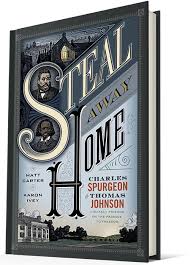
Steal Away Home
The superhero film genre shows no signs of slowing down. Every month a new DC or Marvel film tries to quench our thirst for heroes. We were made for heroes. We need them. The problem is we lack authentic, relatable, real-life heroes who show us what a life of passion, love, virtue, courage looks like in a flesh-and-blood human being. Superman and Wonder Woman might leave us looking for someone to save us, but they are so fundamentally unlike us that they fail to provide fallen human heroes we can emulate. Continue reading Steal Away Home

3 Reasons to Listen to Lecrae’s New Album
Lecrae’s newest album is his most controversial. Some suggest a transition beyond “Christian music” (a label Lecrae himself rejects). Mainstream musicians such as Ty Dolla Sign and Tori Kelly collaborate on several songs. He vocalizes frustrations with evangelicals—among others—wanting him to be a “religious puppet.” He raises issues of social justice. Lecrae questions his faith, admits his depression and doubt, and confesses his sins. Does this album reflect the same values, theology, skill, and expression of biblical faith that drew so many Christians (including white evangelicals)?

Favorite Books From 2017
Ecclesiastes 12:12 says, “Of making many books there is no end.” Today, we might add, “Of the year-end list-making for books there is no end.” All such lists are faulty because they’re limited to both the list-makers preferences and the works they read (and didn’t read) in a given year. Nevertheless, I find such lists helpful in for pointing me to books I might have missed but might want to add to my ever-growing Amazon wishlist.
Below are a few of my favorites I read in 2017 (not necessarily published this year).

Communion Meditation: God’s Work, Not Ours
(This is a communion meditation shared at my church to prepare us together. I hope it encourages you with the gospel of grace.)
This year we’ll be thinking about the Reformation, since it’s considered the 500thanniversary. As we take communion this morning I want to prepare our hearts by sharing one thing we can learn from the Reformers like Luther and Calvin.
One emphasis among the Reformers for baptism and the lord’s supper that many of us as evangelicals miss is these ordinances are first about what God is saying to us and what God is doing to us. While we respond and remember in baptism and communion, we cannot miss that they are first God’s work and provision. We primarily receive something in communion rather than do something. The Lord’s Supper is more about the claim Christ is making on us and the gift he is offering to us than what we do for him.
In the Lord’s Supper, Jesus gives us a visible, chewable sign he has given us forgiveness and assurance through his body and blood. They give us greater confidence in God’s promises and faithfulness as we taste and touch them. The elements of bread and wine are God’s tokens, God’s visible word promising in Jesus there is redemption from our sin, shame, guilt, and bondage this morning.
That’s why when Jesus ate the first Lord’s Supper with his disciples, with both bread and wine he gave something to the disciples. At the table he was not receiving something from them as they ate but he was giving them something. He says take and eat, this is my body for you. He tells them, I am the bread of life that feeds you, and I am the Passover lamb whose body is broken so you might be whole. When he gives the cup he says, this is the blood of the new covenant for you, take and drink it.
He’s not asking them to focus on what they’ve done and see this meal as their time to do something, but it’s a time to receive something from Jesus who offers forgiveness, a covering for our guilt and shame, and life with God as our Father. The food is the gift of his faithfulness, provision, and promises not our faithfulness or devotion or activity.
My encouragement this morning is that if you’ve never said yes to God’s gift of salvation in Jesus, Christ still offers himself to you but the meal is for those who have trusted in Jesus’ sacrificial life and death as the one and only means of forgiveness and salvation. Our prayer is that even today you would receive God’s gift offered in the person of Jesus. If you are a believer, as we pass the bread and cup, take time to rehearse the gospel to yourself. What is it you bring in here today: Weariness, doubt, sin, the sense of feeling frenzied, a dry heart, guilt or shame? Jesus offers you something different through himself, so apply the gospel and find freedom and life in who Christ is for you.
On the night Jesus was betrayed he took bread, and when he had given thanks, he broke it and gave it to the disciples and said “take, eat, this is my body.” And he a cup the cup and gave thanks and gave it to them, saying “Drink of it, for this is my blood of the covenant which is poured for the forgiveness of sins.”
(Saint) Patrick
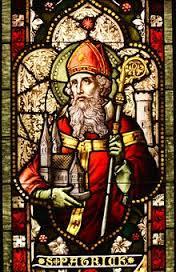 “59…For beyond any doubt on that day we shall rise again in the brightness of the sun, that is, in the glory of Christ Jesus our Redeemer, as children of the living God and co-heirs of Christ, made in his image; for we shall reign through him and for him and in him.” (Patrick’s Confessions)
 indycrowe