
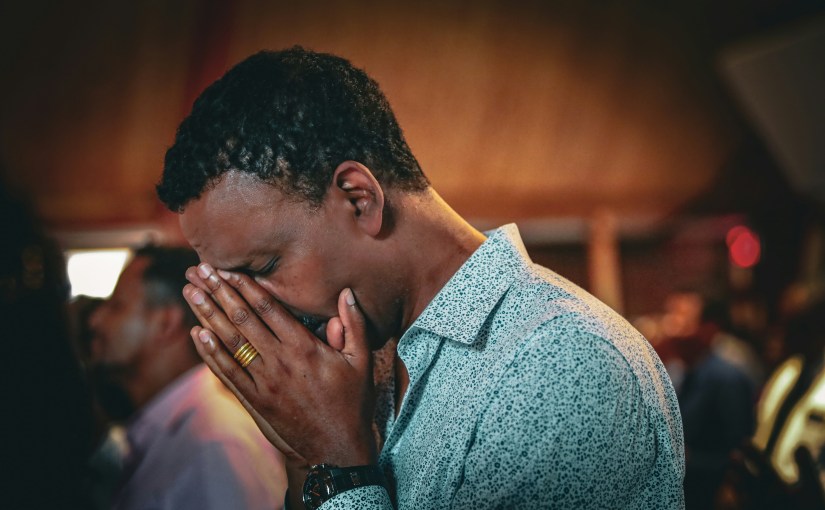
I think we can know God has good plans and purposes for us in our personal trials, and yet the pain of those trials lingers. There’s a sting of the trial but then there can even be a bit of a sting in God walking us through it. I say that believing God is always wise, good, loving, and faithful in everything we go through, and that He is with us in whatever dark valley He leads us through. You can know God’s heart is good and loving, you can trust His character and plan, and yet it still hurts. You might even be able to give thanks to God or be thankful for the trial in retrospect (or at least grateful for what God has done in and through it) and yet still carry wounds and scars from it all.
The Pain and Praise of Moses and David
As our church makes its way through Exodus and I teach on the Psalms, the stories and words of Moses and David affirm these things for me.
In Exodus 2-3, Moses had lived in luxury and been given the best education and training in the world. He was on a path to do and experience great things in Egypt. But after killing an Egyptian to save a Hebrew, Moses had to flee from Egypt as an exile. He journeyed through the harsh desert and sojourned under the sun’s relentless rays. He became a poor shepherd who lived in the no-mans-land of Midian. His new life wasn’t without blessing, but certainly it was an unexpected and painful path.
He spent forty years in the wilderness before God revealed Himself at the burning bush and called Moses to command Pharoah to let God’s people go. This wilderness season had its fair share of pain, loss, disappointment, confusion, and discouragement. God was using it all in Moses’s life to shape him and prepare him for the significant plans in the final third of his life. We recognize God’s good and wise purposes through Moses’s winding path, but that doesn’t mean the trials weren’t hard to endure.
Similarly, in the psalms we have the records of several of God’s people (especially David) who walked through pain and yet learned to trust God and experienced God’s strength, deliverance, nearness, and faithfulness. The psalms can even speak of God afflicting His people to do them good[1] (just as God says all the hard things in the wilderness had the ultimate purpose of doing Israel good in the end; Deut. 8:16). David and other psalmists can cry out in pain to God while finding their hope and peace in God. The same psalms express ongoing pain in the midst of genuine praise.
Finding Hope in Our Hurt
I think about some of my own trials, including losing both parents to cancer in the last three years. Those have felt like major losses in my life and for my young kids. Their absences, and the void of their love and support to us, and the grief in that absence, have stung. I trust God’s purposes and plans. I rest in His goodness, sovereignty, faithfulness, wisdom, and love. I take refuge in His presence and strength. I’m grateful for the blessing my parents were to me, and I know God will use this for good in our life. But that doesn’t mean it hurts less. That doesn’t fill the void of their absence for me or my family. That doesn’t erase all the questions.
This is part of what it means to move forward by faith in God with honesty about the wounds that remain and the sting we feel. Christians can sometimes talk and act as if when we trust in God that means everything is fully healed over or all dark clouds are removed from the skies in our life. But the tension is living honestly with the stings and wounds from the pain in life while also living with a faith that trusts in God through it all.
The idea of being a people who are sorrowful yet rejoicing (2 Cor. 6:7) conveys this, meaning not so much that we have moments of sorrow and moments of joy—though that can be true—but that we are a people who learn how to carry both sorrows and joys simultaneously. We can trust the goodness and wisdom of God even when we don’t necessarily like the circumstances in our life that He’s allowed us to walk through. We can praise Him even in our pain, pain He’s allowed (for a purpose).
But the sting, the pain, and the wounds can linger. And that’s okay. Living by faith as a Christian doesn’t mean we don’t still feel these hurts or that we don’t still wrestle with wondering why God allowed this to be the desert road we had to walk. We can still shed tears, feel deep pain, ache for healing or wholeness, and long for a better day even while we lean into and lament to God and trust all that He has done and will do in our lives.
This “tension” of faith that carries hurts and wounds while still trusting and loving God isn’t a tension that needs solved or resolved. It’s just the lived reality of those who walk by faith in God, and yet that walk of faith sometimes has a limp.
Don’t feel guilty or shrink back in faith as if you are failing when your heart still grieves, when the pain stings, or even when the confusion lingers. These might always exist in this broken world that’s full of troubles. We sojourn on and persevere knowing that God is with us, near us, and at work for us still. We let these things push us to God. Just as God led Israel through the howling wilderness so that He could be the One who carried them through (and they would know it), God alone is the One who can comfort us in our grief, provide healing for our wounds, draw near to the brokenhearted, strengthen the weak, encourage the discouraged, offer hope to us in despair or joy in sorrow, and lead us through the valley of the shadow of death.
Suffering can lead to the greatest good in our life, including that we might better know God in our sufferings, both who He is and how He is with us and for us.
Though You Slay Me
Shane & Shane wrote a song entitled “Though You Slay Me,”[2] based on Job’s words, “Though He slay me, I will hope in Him” (Job 13:5; cf. Job 5:18). Job could also say, “Blessed be the name of the Lord, the One who both gives and takes away.” I don’t think Job said that lightly, with a chipper smile on his face, but with a quivering lip and aching heart that still chose to trust in and worship the loving God who knew exactly what He was doing in Job’s life (even if he didn’t).
This song by Shane & Shane opens with these words:
“I come, God, I come
I return to the Lord
The one who’s broken
The one who’s torn me apart
You strike down to bind me up
You say you do it all in love
That I might know you in your suffering.”
I think a seasoned Christian who has walked through suffering and knows God’s faithfulness through it all can sing these songs, sometimes through tears. I don’t think I would have understood these ideas early in my Christian walk, but I do now. There’s a depth to faith in the fiery trials and a wonder of God’s mysterious but perfect ways in those trials that allows us to groan and grieve even while we trust and sing. We are sorrowful yet rejoicing because we are those who feel the sting of the brokenness of our world but also have felt the soothing balm of the God who draws near and binds up our wounds.
Like a parent allows the surgeon use the scalpel on their child and inflict pain on them as a means to heal and help them, the God who allows our afflictions according to His good and wise purposes for us is the God who is with us in those afflictions and supports and sustains us through them. His heart is always full of love, even when the dark clouds of life hide His face. Trust Him. Draw near to Him and take refuge in Him. Let the sting of pain and the hurt of trials lead you back to Him, with honesty and humility but also seeking His healing and comfort.
The God over the storm, who allows it to come your way, is driving you to Him as your fortress and shelter. The God who is sovereign over your affliction is present with you in your affliction.
David Mathis, writing on the experience and words behind the song “Though You Slay Me,” writes:
“By no means does such praise mean the pain is lessened. The hurt is every bit as real. But such a supernaturally inspired testimony to God does testify, Even as great as this pain is, God is greater. My desire to have this pain removed, or this loss restored, or these hurtful circumstances altered, must not eclipse my desire for the God who is powerful enough to remove it, or restore it, but is loving me in a way that is greater than I can understand.”
Choose to praise Him in your pain. Let the stings and scars of life lead you to Him for comfort and healing. Trust His wise and loving (but unseen) purposes. Sing on with hope and in faith to the God who supports and strengthens you on the path He has led you down.
“Though the fig tree should not blossom,
nor fruit be on the vines,
the produce of the olive fail
and the fields yield no food,
the flock be cut off from the fold
and there be no herd in the stalls,
18 yet I will rejoice in the Lord;
I will take joy in the God of my salvation.
19 God, the Lord, is my strength;
he makes my feet like the deer’s;
he makes me tread on my high places.” (Habakkuk 3:17-19)
NOTES
[1] See places like Ps. 60 or 71:20-21.
[2] [They share more of the backstories to this song here and here, and why we can worship God with heavy hearts.]

 indycrowe
Habakkuk 3:18 is my verse for this year.