

We’re big movie fans at our house, and with two kids eight and under, we watch a lot of Disney and Pixar shows. One we all enjoy is Inside Out 2. It’s so good for so many reasons. Below is a sort of movie guide, with come potential discussion questions you could use after watching it, as well as a few of the themes I like most about it (as well as what I think is ultimately missing from it or falls short in it).
Like most Disney and Pixar movies, friendship is a key theme, but it also gets into how that desire to fit or belong can cause problems. Other themes include the human desire for joy, the importance of our beliefs (which shape behavior), both growing up and watching others grow up, and obviously the experience of our emotions.
DISCUSSION QUESTIONS
The ages and interests of the kids might help you decide which ones to focus on. If you want a version that can be downloaded or printed, click below.
The Parents and the Child
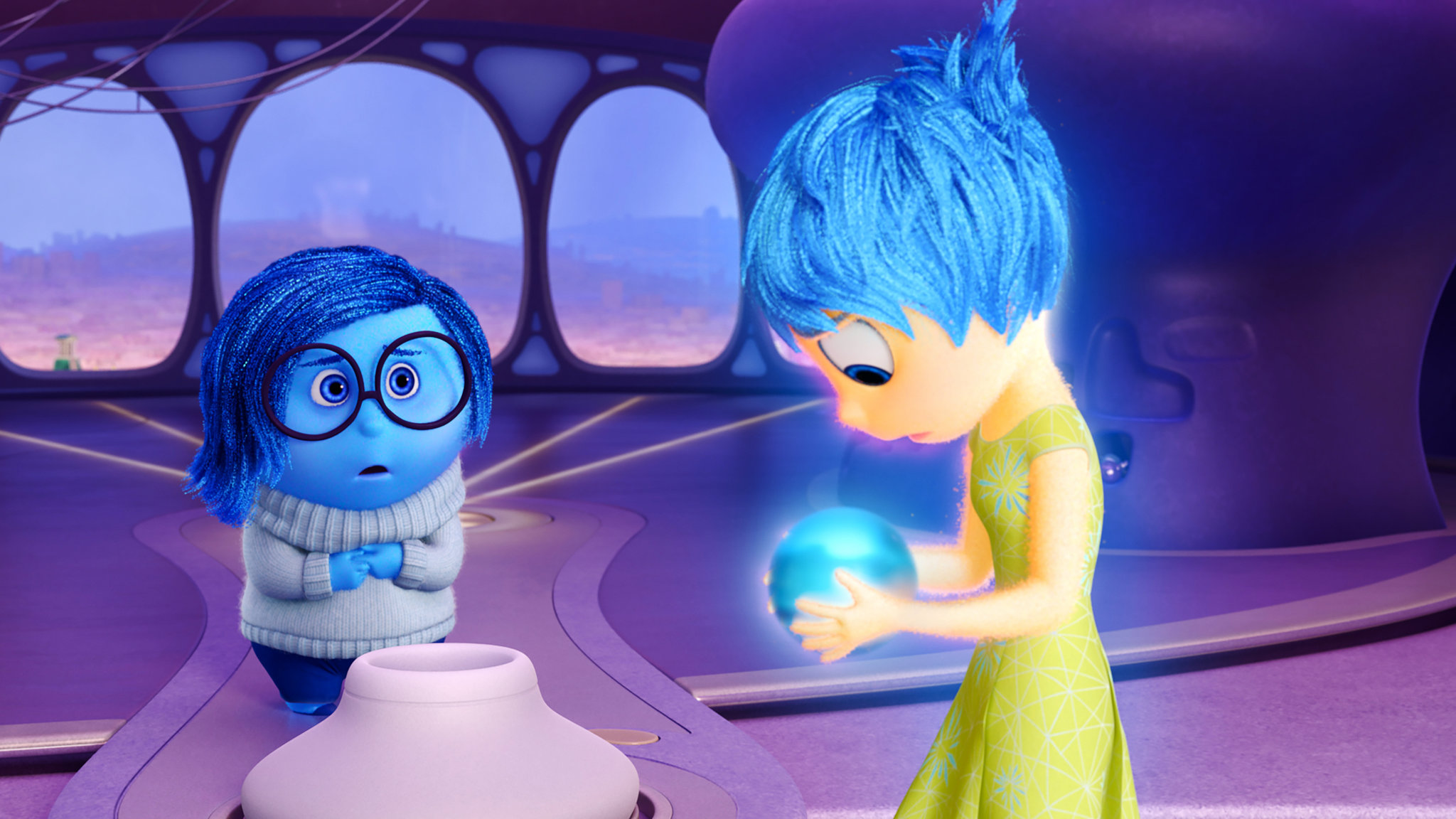
Part of why so many people like Inside Out 2 is it resonates with our experiences, both in growing up and in parenting kids who are growing up. We remember what it was like to move from a child to a teen, to make new friends, and to experience many of the things Riley goes through. But for parents, we not only lived it, now we have the experience of watching our kids go through it. The movie taps into both the happy moments of seeing a kid grow up as well as the pain in what’s lost as they age out of some of what makes childhood so sweet.
I think Joy not only plays the part of Riley’s emotion but also takes on a parental role and walks us through elements of what a parent then experiences. Joy has a parental feel within HQ over Riley. But Joy also is learning to deal with Riley’s changing emotions, her complexity, and not being needed as much. She’s afraid of losing the Riley she’s known for so long as Riley ages. Joy sometimes now feels unsure what to do or how to help Riley as she navigates new emotions and challenges.
Joy wants to hold onto the past memories of Riley’s childhood and not let them be forgotten. When Joy walks through imagination land, so many good memories are stirred up. She doesn’t realize how much she misses so many of these things from Riley’s past until she faces these reminders.
Enjoy every moment and every season. No one can prepare you for how quickly they grow up. Seasons seem like they’ll be here forever and then they’re gone. We can’t keep them young like what we want, and we can’t live in the past, but we can be thankful for all the sweet moments in the past. We can be present in the moment to experience and enjoy them. And we can support and love them as they grow, change, and their life and ours become more complex.
The Role of Beliefs
Deep inside of Riley is a room called “the Belief System.” The movie portrays well how our beliefs and thoughts play a fundamental role in our understanding of who we are (“sense of self”) and how way we act. Both beliefs in general (as they build together a belief system) but also specific statements of belief matter. Beliefs affect everything. That’s why it makes all the difference if our beliefs are true or false, right or wrong, and wise or foolish.
Early in the movie, Joy connects Riley’s belief that she’s a good person to the act of helping a girl in a moment of embarrassment. Some of the other belief statements we hear in Riley’s belief system include “Mom and Dad are proud if me,” “I’m kind,” “I’m strong,” I’m a really good friend,” and “I’m a winner.” As Joy says, “These beliefs come together to make our Riley.” We don’t just form beliefs but our beliefs form and affect us.
Joy says it’s these beliefs that help Riley make good choices, but alternatively, part of the plot is that the new characters on the scene (such as Anxiety and Envy) start planting new beliefs. These new beliefs rooted in half-truths, wrong assumptions, and fears lead to new behaviors. When Anxiety is in the belief system, we hear some of the new statement of belief shaping Riley, including “If I’m good at hockey, I’ll have friends,” “If I make the team, I won’t be alone,” and “As long as we like what they like, everything is fine.” These “bad beliefs” result in Riley trying to control her future, proving she’s the best, doing what it takes to be liked, and eventually burning her out.
Our behaviors and emotions, and our sense of who we are (identity) and what behaviors line up with who we are, these are all rooted in our beliefs. Again, this is why what we believe and think matters so much. This is why we should examine our beliefs in the moment and overall, working hard to pursue truth, cultivate it, and weed out any false beliefs and lies taking root. It’s also why it matters so much that parents see a fundamental part of their role as teaching their kids truth and wisdom, not merely hoping they stumble onto these things eventually.
That means the way we change, the way we fight back against things like anxiety, worry, envy, and fear, isn’t merely by trying to change our behaviors. Yes, work on replacing bad habits, behaviors, and desires with good ones, but also we must fight and work at the level of what we believe. Recognize what you’re thinking about and believing, whether it’s true or false, in line with God’s Word or not. Address the root (beliefs) and not just the fruit (behaviors). I’ve written more on how we fight with our minds in “10 Ways to Renew Your Mind.”
A Realistic Look at Anxiety

Anxiety might look somewhat different in every person, but I think Inside Out 2 gives an accurate portrayal of anxiety through the character Anxiety. Here are a few things I think the movie depicts about anxiety that might be both helpful and resonate with you experience.
Inside of Riley’s HG, Anxiety is full of energy and has lots of ideas and plans. She thinks her role is to help Riley be prepared for all the possibilities. That thought of being prepared and concerned might start with right intentions, but it quickly shifts into overdrive and leads to excessive concern and the inability to rest. There are endless possibilities of what could happen. And many of them never will come to fruition. Anxiety is often caught up in these hypothetical scenarios that imagine a bad future and worse-case scenarios and assume they will take place.
One scene that pictures this so well is when Anxiety takes over “imagination station.” This place is full of daydreamers who used to be employed coming up with fun ideas. Now Anxiety has enslaved the imagination and forces it to sketch out all the negative things that could happen. Disgust explains, “They’re using Riley’s imagination against her.” Night and day, the imagination workers conceive new scenarios and possibilities as Anxiety prods them with questions that assume what can go wrong will go wrong. Anger tells these workers, “Anxiety has you chained to desks.”
It’s such a good depiction of how Anxiety turns our own thoughts, imagination, and mind against us, but also it illustrates how enslaving Anxiety becomes. Anxiety never sleeps and always works overtime. There are endless scenarios of what could go wrong. There’s always more to accomplish, fix, and be prepared for. It holds out the carrot that power and peace are found by controlling more, but that’s never how it works.
Anxiety not only spends her time endlessly running the data on the possibilities, but she’s constantly having to extend her plan into a longer, more elaborate, and more stressful plan. Anxiety must take on more and more control throughout the film, but rather than make things better, it tends to only make things worse. Riley loses her joy, pushes others away, feels helpless as she loses control, feels the need to prove herself, and begins to fray at the edges. Anxiety runs Riley into the ground until she’s overwhelmed, with Anxiety freezing as Riley begins to experience a panic attack. Anxiety thought she was helping Riley, but Anxiety ends up hurting her. It’s a powerful scene.
Earlier I mentioned the role of beliefs shaping behaviors. Anxiety begins planting new beliefs in Riley’s belief system, and these new beliefs change Riley’s behavior. Anxiety thinks she’s making a better Riley. Anxiety states, “It’s not about who Riley is, it’s about who she needs to be.” But as viewers, we can tell this is not a better Riley. Anxiety leverages the lies, false beliefs, and wrong assumptions planted in Riley’s belief system. This causes Riley to begin to believe that if she doesn’t make the hockey team then her life is over and she will never have friends.
The final and primary lie that Anxiety turns to is, “I’m not good enough.” As this lie echoes through Riley’s head in the game, that belief causes her to not be calm but to play out of control. It doesn’t end up helping solve her problem but makes it worse as she alienates herself from the team, gets a penalty, and plays her worse game. It’s a living example of what the Bible says, that our anger and anxiety don’t produce the righteousness of God (James 1:20). When we sin to get what we want, we eventually end up losing that thing.
By the way, if you have younger kids, we love these prayer and scripture cards by Tiny Theologians on “My Feelings Matter to God.”
Anxiety alongside Joy and Envy

Anxiety and Joy struggle to coexist. Anxiety pushes Joy out. (I think this captures how our anxiety tends to steal our joy, but also how then pursuing joy through thanksgiving or adoration can help fight back our anxiety.) Joy likes to live in the present and enjoy the moments and who Riley is, but Anxiety can never enjoy the present because she’s always viewing it through the lens of others and what can go wrong. Anxiety is always on to the next plan, problem, disaster, and future scenario.
In the end, Joy helps takes the driver’s seat. Riley, and her other emotions, learn to live with Anxiety, but they also learn to not let Anxiety dominate. When Anxiety has fearful, future-oriented scenarios pop up or wants to take control, Joy reminds Anxiety that none of those things are happening right now. Joy then offers the wise advice to Anxiety that we can’t control what we can’t control. They can’t control or worry about if Riley makes the team (it’s out of their hands), so they can focus on the things in that day that they can affect and be faithful in. I think it’s a great reminder that there are things God has made us responsible over or in, and there are things He doesn’t ask us to be responsible for. We need to be faithful in what God asks us to do (our responsibilities) but not over-extend ourselves by trying to do things God hasn’t asked us to do or taking on His responsibilities.
The movie also shows how Anxiety and Envy work together and feed off one another. They both speak lies and believe lies. Envy tells Anxiety, “Tomorrow is everything,” meaning that how they perform in the hockey game tomorrow means everything (which isn’t true). They both focus on the negative and feel the need to be esteemed by others, fit in, and be liked. Both look at others and leave Riley believing, “I’m not good enough.” Anxiety and Envy often work in tandem, and they’re a bad combo. Watch the movie and just notice how these two characters work together, what happens as they feed off one another, and then reflect on what that might look like in your life.
The Pursuit of Joy and Need for Forgiveness

There were a couple smaller themes I also appreciated. One was that the movie portrays the common human pursuit of joy. Joy’s character does so much in the movie, and part of her role is to help us think about our own joy. At one point, Joy wonders if part of growing up is experiencing less joy in our lives. It’s something we might ask. But the film shows that while life increasingly has more emotions and experiences within it, our pursuit of joy never ends. We long to experience joy. We want more joy in our life. We want Joy at the control center, helping us enjoy the present, notice the little things, and celebrate all the gifts that every day and every season bring.
We were made for joy. God put that in every human heart. We pursue it in a million ways, most of them only providing quick hits of pleasure but never offering the true and deep joy we long for. That doesn’t mean we experience joy all the time, but our hearts will always seek it and long for it. God made us this way to ultimately lead us to Himself. All finite things on Earth ultimately wear out, fade, or go away. The joy they offer has a shelf-life, and usually it only reaches so deep into our core. But because God is an eternal, infinite, fully glorious Being, there is infinite and deeply satisfying joy in Him. I wrote my devotional on Colossians, Finding Satisfaction in Christ, in part to show this theme is central to knowing Jesus. God made us with longings for joy to lead us to Himself, the fountain or giver of all joys and the greatest joy.
Another theme in the movie is sin and forgiveness. Riley wrongs her friends, and that sin against them creates a divide in the relationship. Sin always causes relational separation, and that separation requires forgiveness to repair it. Toward the end, Riley apologizes to her two closest friends for how she acted. They extend forgiveness and the group is reconciled. This grace, forgiveness, and reconciliation seems to provide so much of what Riley needed. More than merely a strong sense of self, she needed right relationships. The weakness of the movie is it centers too much on Riley, not just in her experience but in trying to find the answers or wholeness within. But we see that Riley needs more than herself. She needs to be in right relationships with others, and she really needs voices and thoughts beyond her own to help her, guide her, and tell her what is true, good, and beautiful.
What Was Missing?

Despite really enjoying the movie and the way it portrays so much of what we experience internally, there were a couple of things that stood out to me about how the Christian life (following Jesus and living according to the Bible) offers hope and wisdom in key areas it was missing in Riley’s life.
One thing missing is a voice outside of Riley. The movie reflects the worldview of most people, which is that fighting anxiety and our thoughts, or finding a sense of self, or determining what is right and wrong, is solely something we must do. But how can she know which thoughts and beliefs are true or wise when she’s full of confusion or mixed desires? Where is a voice outside of her that can guide, help, encourage, and speak truth to her? In Inside Out she doesn’t have that, so the battle is all within her and on her. She inevitably becomes confused, fatigued, and frustrated, as will anyone who looks inside themselves for all these things that we can only find outside of ourselves.
The movie, like most shows and films today, seems to suggest she just needs to believe more positive things about herself and trust in herself. There’s always some truth to this. But what she really needs is truth beyond herself, trust in something or someone other than herself (since she is so finite, limited, weak, and broken as a human being), and objective and authoritative answers that don’t change as she changes. She doesn’t see and know all things, so when it’s left to her, it would be very easy to pick the “wrong identity,” be confused about what is true vs false or wise vs foolish, or be deceived about what will really make her happy (like healthy friendship even more than making a hockey team). Within Riley, there’s a mix of good and bad behaviors, beliefs, decisions, and emotions. That means the problem is within her, and she needs a solution outside of her.
We are all the same. We’re told that we are the answer to our problem, but so often we are the problem. Our sin within us is our biggest problem, and that is not a problem we can adequately deal with. We can’t wipe away our own sin, overcome it on our own, or make up for it. We need rescued and forgiven. We need God’s solution beyond ourselves. We need our hearts made alive, our sin washed away, our identity restored, and our minds renewed. These are only found in a relationship with Jesus. The problem is within us but the answer comes from outside of us and is given to us in the gift of God’s Son, Jesus Christ.
There’s also good news in knowing that we aren’t limited to the voice and thoughts in our own head, but we do have an objective, authoritative voice outside of us that speaks truth to us. God’s Word tells us what is true, good, and wise. God’s Word exposes our lies and half-truths. God speaks to us so we are not left to fight on our own or figure this out on our own. God supplies both the wisdom beyond us and then gives His strength to us. The Bible then is not only the needed voice outside of our own heads, but it reminds us to stop looking inward for the answers but to look upward to God as our hope and help.
Part of what the Bible then does is provide a true account and vision of our identity, or sense of self. Riley’s identity is a moving target. There’s no one to help her define who she really is, so there’s instability with a lack of a meaningful sense of self outside of the limits of her own judgment and thoughts. How can she figure out who she is and form an identity on the fly when she doesn’t yet know enough truth, let alone know herself well? We need a more firm and fixed identity, something less subjective and unstable. This is why rooting our identity in who we are as an image bearer of God and being in Christ provides that unchanging sense of identity. That sense of self in Christ then makes it much more clear who we should be and what we should do. Again, this identity, or sense of self, is firm rather than flimsy because it comes from beyond us rather than is discovered within us. We need objective, eternal Word to give us this.
OTHER ARTICLES ON MOVIES
“The Lion King and God’s Protecting Love“
“‘Soul’ is the Anti-Disney Disney Movie“

 indycrowe
it is a good movie I think !