

In The Rise and Triumph of the Modern Self, Carl Trueman writes, “Understanding the times is a precondition of responding appropriately to the times. And understanding the times requires a knowledge of the history that has led up to the present.”[1] Over the last few years, several helpful books have been written explaining the expressive individualism defining our culture today. This is not the culture of the world “out there.” All of us live and breathe in these waters and are more affected by it than we realize.
While there are layers to expressive individualism, at its heart it says that we find our meaning by looking within and then expressing our feelings and desires. Yuval Levin offers this summary:
“That term suggests not only a desire to pursue one’s own path but also a yearning for fulfillment through the definition and articulation of one’s own identity. It is a drive both to be more like whatever you already are and also to live in society by fully asserting who you are. The capacity of individuals to define the terms of their own existence by defining their personal identities is increasingly equated with liberty and with the meaning of some of our basic rights, and it is given pride of place in our self-understanding.”[2]
By better understanding the values and presuppositions of the culture we live in, we can respond faithfully as individuals and as the Church. The goal isn’t merely critique of the culture, but an understanding of how we are subtly tempted toward values, assumptions, practices, and beliefs that can harm our testimony in the world and our growth in Christ.
My hope in recommending these books is they can shine a spotlight on some of the dangers inherent in culture today and how we can both resist them and respond. I find that when you read multiple books on any topic, they provide a conversation we can join in on, and together they elevate our understanding of the subject. Some of these resources dig deeper into the philosophy and history undergirding our cultural moment while others speak to challenges within the church or offer suggestions for how to respond faithfully. I’ve focused on books that I think most Christians can understand—so I’ve avoided more academic works—as well as Christian authors I find trustworthy.
Recommended Books
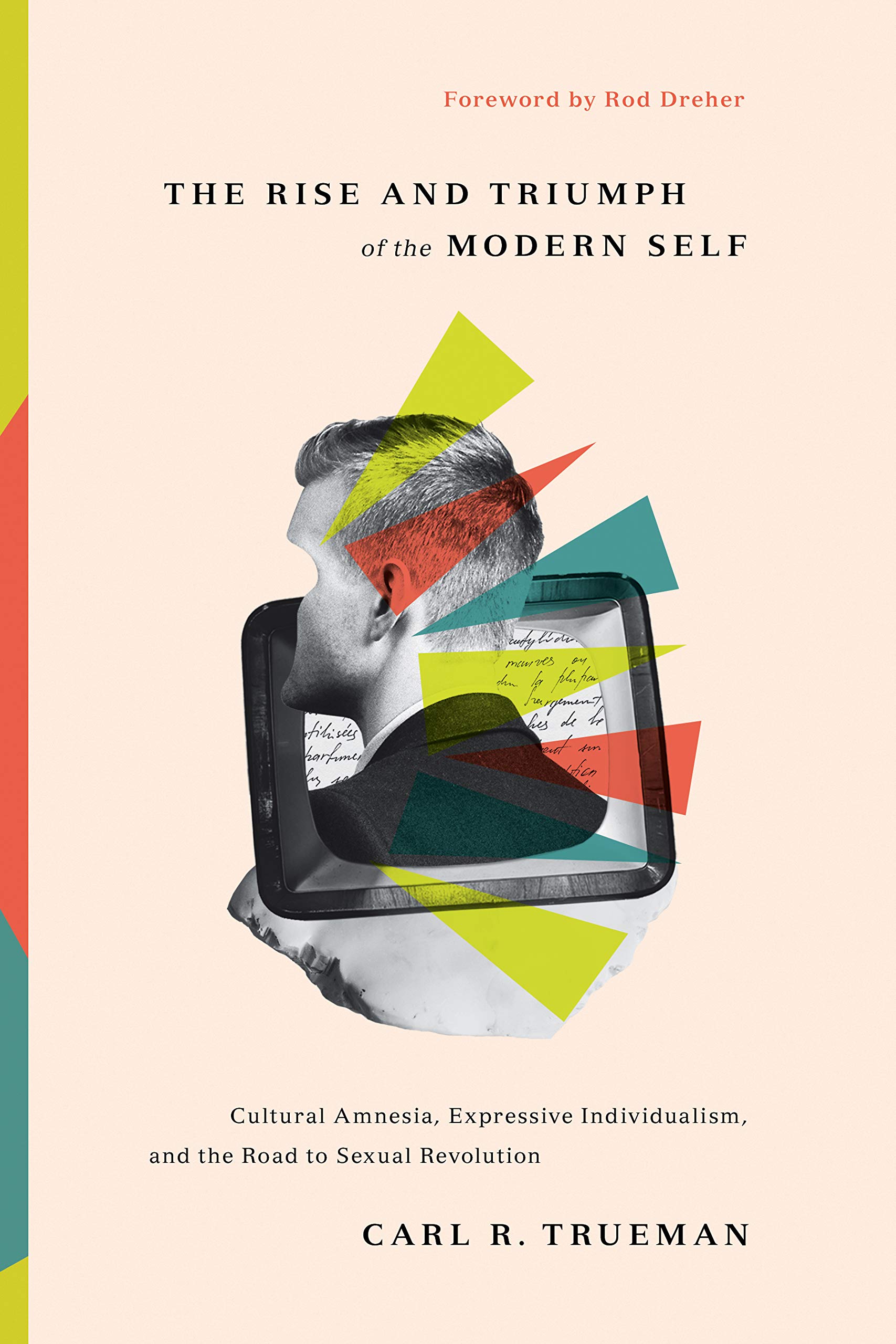
The Rise and Triumph of the Modern Self: Cultural Amnesia, Expressive Individualism, and the Road to Sexual Revolution by Carl Trueman
This might be the densest book of the bunch, but it’s the most helpful in tracing the genealogical history of how we got here. As a historian and theologian, Trueman explains why many of the practices and values today—especially those related to the gender and sexual revolution(s)—make sense in light of how philosophies trickled down to today’s social imaginary. Nothing we’re seeing is “out of the blue” but makes sense in light of the expressive individualism that has been formed over the last few centuries. If you’re interested in the history and key figures undergirding the movement, this is a must read. If nothing else, buy it and read Part 1 for a summary of the whole.
“My aim is to explain how and why a certain notion of the self has come to dominate the culture of the West, why this self finds its most obvious manifestation in the transformation of sexual mores, and what the wider implications of this transformation are and may well be in the future.”
For an overview of Trueman’s book, read “Rise and Triumph of the Modern Self” or “The Most Important Cultural Book of the Year (Maybe Even Decade).”
How (Not) to be Secular: Reading Charles Taylor by James K. A. Smith
Charles Taylor has been an influential philosopher in understanding the cultural climate we live in. Smith’s book provides an introductory, street-level guide to the work of Taylor, including key ideas and terms that are now used in a wider audience. In describing our “secular age,” Smith helps believers understand why we so often experience disorientation in an imminent (closed to the supernatural and transcendent), individualistic age and then how to not get stuck there. He helps us understand why doubt is now normative—even for the believer—but also why the transcendent is inescapable.
“What does it look like to bear witness in a secular age? What does it look like to be faithful? To what extent have Christians unwittingly absorbed the tendencies of this world? On the one hand, this raises the question of how to reach exclusive humanists. On the other hand, the question bounces back on the church: To what extent do we ‘believe’ like exclusive humanists?”
Mike Cosper offers an excellent review of the book here.

Our Secular Age: Ten Years of Reading and Applying Charles Taylor from The Gospel Coalition
This book is similar to How (Not) to be Secular by James K. A. Smith, but it’s written more specifically to equip the Church and local churches to understand how our “secular age” impacts both the people in our neighborhoods and the people gathering at our church. The various contributors address a number of fields, everything from preaching to politics to art. I found it to be an excellent resource to understand expressive individualism’s impact on our witness and discipleship, and just as important, a guide for how to respond.
“Belief in God has not completely disappeared: we simply no longer need him for meaning and significance…. The buffered self sees God and neighbor as enhancements that we can take or leave when they become burdensome or demand sacrifice.”
You can find a few of these chapters in a condensed, article-length form at The Gospel Coalition. Here’s an example, with “How Your View of God May be Secular,” by Jen Pollock Michel.

Disruptive Witness: Speaking the Truth in a Distracted Age by O. Alan Noble
Alan Noble points to how the habits and practices of our day—rooted in our secular age—distract us from clear or deep thinking, hinders our witness and evangelism, and affects our engagement with social media. After a diagnosis of some of the problems—which make so much sense about why we do the things we do—he recommends practices that can act as irruptions or disruptions of the transcendent into our flat, immanent world. (One of my hopes behind my book on thanksgiving is it can point people to one of these “disruptions.”) I’ve recommended this book a lot in 2020 to help others think about their thinking, but also to explain some of the ways we use social media, jump on and off causes, and tether our identity to the views we take stances on.
“Our frenetic and flattened culture is not conducive to wrestling with think ideas; ideas with depth, complexity, and personal implications. It is a culture of immediacy, simple emotions, snap judgments, optics, and identity formation. In such a world, is it any wonder that Christians so often speak past their listeners?… Reflection invites us to consider the contrary commitments we have in life, but it requires time and attention—our scarcest resources.”
You can read an excerpt of Noble’s book here and here.
Rethink Your Self: The Power of Looking Up before Looking In by Trevin Wax
Trevin Wax provides a simple but helpful paradigm for how we find meaning and understand our identity. He describes the cultural pattern today—descriptive of expressive individualism though he avoids this language outside of footnotes—as individuals starting by looking in at their own desires and feelings before looking around for approval before looking up to find spiritual affirmation or adding a spiritual dimension to their life. Trevin explains not only how unstable and crushing of a weight that is, but he offers an alternative that begins with looking up before looking around or looking in. Wax writes a simple but compelling book that can speak to both the young and old, the believer and the unbeliever.
“Why does everyone just nod along to the idea that the purpose of life is to ‘be true to yourself’ and ‘chase your dreams’ and ‘follow your heart,’ as if the message is so obviously true that it would be silly to question it? Because most people in our society view themselves and the world like this: you look in, then around, and then up. The default setting for people in our society is to figure out life according to these priorities.”
Trevin has written a series of helpful articles on expressive individualism, including “Following Christ in an Age of Authenticity,” “Don’t Settle for the Gospel of Self-Fulfillment,” and this series of articles.

Enough about Me: Finding Lasting Joy in the Age of Self by Jen Oshman
The culture of “expressive individualism” encourages us to build a life around ourselves, telling us we can be enough. Our habits and practices then lead us to seek our joy by things that fix our eyes on ourselves. But there is no lasting joy and deeper purpose down that path. Jen’s book—written to women but applicable to everyone—provides a practical exhortation of why looking in is insufficient and why looking to Jesus satisfies. You won’t see “expressive individualism” in its pages, but the cultural pressure we feel and the fixation on ourselves are symptoms of living in this culture. The Church provides an alternative way of living as we point one another to Jesus, the only one who can be enough. Identity, community, purpose, and joy aren’t by looking to myself but by looking to Jesus.
“Me-ology is the junk food diet we’ve been serving up in our spiritual lives. The healthy alternative we need to immediately start ingesting is theology. Theology is the study of God. It is the examination of his attributes and abilities, his goodness and faithfulness, who he is and what he has done. Theology is substantial, true, and life-giving. Feasting here will allow us to grow stronger and more into the image of him who made us.”
You can read several articles by Jen Oshman on these themes at Crossway. You can also see my post for 10 of my favorite quotes from Enough about Me.
The Gospel According to Satan: Eight Lies about God that Sound Like Truth by Jared Wilson
Wilson’s book wasn’t written as a direct response to any contemporary philosophy, but several of the lies addressed in this book have blossomed out of the soil of expressive individualism, including “you only live once,” “God just wants you to be happy,” “you need to live your truth,” “your feelings are reality,” and “your life is what you make it.” These lies might sound appealing, or they might even sound like common sense today, but they’re unbiblical lies (half-truths) that jeopardize our joy in Jesus. Wilson exposes these lies for what they are and show us a better way forward.
“The lies we believe today that erode our dependence on God and discredit our belief in the good news of his Son Jesus are not blatant. They are subtle. They make promises. They seem plausible.”
Listen to this For the Church Podcast to learn more about the content of the book.
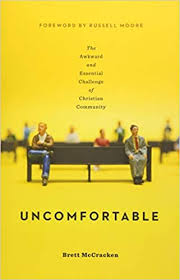
Uncomfortable: The Awkward and Essential Challenge of Christian Community by Brett McCracken
Brett McCracken is one of the contributors to The Gospel Coalition’s book, Our Secular Age, and he’s also written articles directly related to expressive individualism. A couple of the byproducts of this age preventing challenges to biblical community are consumerism and individualism. Consumerism doesn’t just affect Christians when it comes to their preferences of where they shop and eat, but we bring it into our expectations and experiences within the Church. Part of this individualism and consumerism prioritizes my comforts and personal tastes. McCracken invites us into the uncomfortable to embrace a Christianity that calls us to things that are sometimes inconvenient and difficult, but ultimately worth it.
“But these values rub up against the gospel on the point of self-sovereignty. For as much as we want to have complete control over our lives, following Jesus requires a surrender of will. Jesus is Lord and I am not. Adam and Eve couldn’t accept God’s law as final or binding. And thus sin was born on earth. Following Jesus means putting aside our own desire to be God and allowing him to reign supreme in us and for us…. Yet this is uncomfortable in our self-reliant culture. We don’t want grace that requires us to relinquish our sovereignty.”
You can also get a taste of McCracken’s book “8 Signs Your Christianity is too Comfortable” or “Learn to Love Your Uncomfortable Church.”

Recapturing the Wonder: Transcendent Faith in a Disenchanted World by Mike Cosper
While part of our cultural understanding is that what we see is all that there is, Christians need a faith that lifts our head above the clouds. But because so many of our practices today reinforce an inward, individualistic, and immanent framework, we need to recapture practices that connect us with God and with one another. These remind us just how enchanted our world is and refresh us with wonder. Drawing on liturgical practices and a range of spiritual disciplines, Cosper helps us consider how these practices reorient us to life with Christ.
“To experience the richness of life in God’s kingdom, we must reorder our lives. We need to see through the shallow promises of our culture, and we need rhythms, signposts, and practices that reorient us to another world… If we believe that life with God is possible in this world, and if we believe THAT life is the one we’ve always longed for, then it would be worth whatever it cost us to pursue it.”
You can read an excerpt from Mike’s book here or read this interview with Mike, “How to Recapture the Joy of Awe.”

On the Road with Augustine: A Real-World Spirituality for Restless Hearts by James K. A. Smith
While How (Not) to be Secular offers a “dummies” guide to Charles Taylor and key concepts like expressive individualism at a more cultural-philosophical level, On the Road with Augustine addresses our everyday spiritual concerns (though there’s still a good amount of philosophy in this book). Smith uses Augustine’s story to speak to restless hearts drawn to more by those interruptions of transcendence in our life. Each chapter considers how Augustine provides a roadmap to navigate a specific topic—not primarily as a philosopher or systematic theologian—but as a tour-guide on the journey.
“The earthy, embodied, material world that is all I’ve known would be ‘natural’ for me if I didn’t have a penchant for treating it as end in itself. It’s precisely when I try to make creation my home—when I disenchant it as an end in itself—that it becomes a foreign country, that ‘distant land’ of the prodigal’s wandering: arid, barren, a region of nothingness even if it’s filled with earthly delights…For Augustine, so much of our restlessness and disappointment is the result of trying to convince ourselves that we’re already home.”
For more on this book, read this review, watch Smith present some of the material, or read some of my favorite quotes from the book.
Footnotes
[1] Carl Trueman, The Rise and Triumph of the Modern Self (Wheaton: Crossway, 2020), 30.
[2] Yuval Levin, The Fractured Republic: Renewing America’s Social Contract in the Age of Individualism (New York: Basic Books, 2017), 148.
[3] Trueman, Modern Self, 29.

 indycrowe